
My name is Jaap, and I am a biomedical scientist that also used to live with severe Hidradenitis Suppurativa, the kind that takes over your life. Today, I am completely asymptomatic because I learned how to heal Hidradenitis Suppurativa from within. More importantly, I’ve had the privilege of helping many other individuals with HS get their lives back too.
A Proven natural Roadmap to Manage HS
Get the support and natural strategies you need for lasting relief and join a community that understands.

The HS Source Code: Are Bad Genes the Cause? Or Just a Symptom?
If you’re like I was, you’ve probably asked yourself the most painful question: “Why me?”
Why is my body doing this? Is it a genetic curse? Is there something broken in my “source code” that dooms me to this disease? It’s an isolating and terrifying thought. When you look down at a painful flare, it feels like your body has betrayed you on a fundamental, genetic level.
For decades, we’ve only been able to treat the symptoms, the downstream effects of this fire. But what if we could go upstream? What if we could read the body’s source code and find the exact lines of code that are bugged?
A brand new 2025 study just tried to do exactly that.
A team of researchers used powerful computer analysis to peel back the curtain on the genetics of HS, and they found some interesting things happening in in our disease. It’s a brilliant piece of detective work.
But here’s the catch, and it’s the reason I’m writing this: after they found the flashing lights, they completely missed the most obvious and powerful way to fix the engine. They identified the what, but they ignored the why.
Today, we’re going to break down this new science and show you how this paper is the ultimate validation for the natural treatment of HS.
The Detective Story: Finding the “Hub Genes”
In a new paper in Clinical, Cosmetic and Investigational Dermatology, Dr. Yi Ning Zhai and their colleagues did some incredible computational detective work.
In simple terms, they took two large, existing databases that contained the genetic blueprints of HS lesional skin and compared them to the blueprints of healthy skin. They were looking for differentially expressed genes (DEGs), which is just a fancy way of asking: “Which genes are shouting in HS skin that are whispering in healthy skin, and vice-versa?”
They found 180 of these shouting genes. (Tuned on very hard)
But they didn’t stop there. They knew that most of those 180 genes were just “soldiers” taking orders. They wanted to find the generals, the hub genes that were connected to all the commands. Their computer model predicted 10 main hub genes.
A Proven natural Roadmap to Manage HS
Get the support and natural strategies you need for lasting relief and join a community that understands.
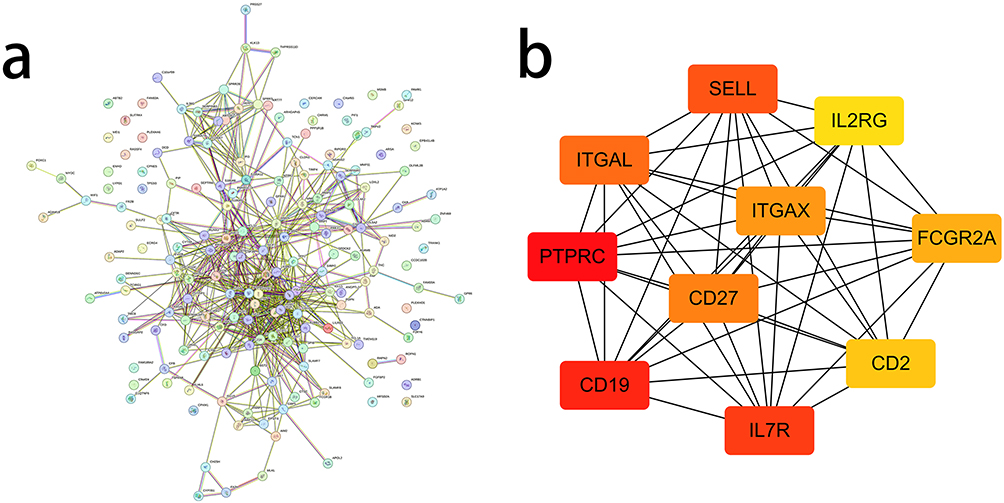
Figure 4b Legend:
- Figure by: Dr. Yi Ning Zhai and colleagues.
- What it shows: This is the network of the 10 most important “hub genes” the researchers’ computer model identified. Think of these as the “generals” on the battlefield. The two we focus on, IL2RG and FCGR2A, are right in this web.
Now, this is where it gets interesting. To prove their computer model was right, they took these 10 genes and tested them in actual tissue samples from 10 HS patients and 10 healthy controls .
And what did they find? The data was, frankly, a bit weak. Of the 10 genes they predicted, only two were actually confirmed to be shouting (significantly upregulated) in the real patient samples:
- FCGR2A
- IL2RG
So, no, this isn’t a genetic curse. It’s not one single broken gene. It’s a pattern of dysregulation. These two genes aren’t the cause of the fire; they are the smoke. But by looking at the smoke, we can figure out what’s burning.
A Proven natural Roadmap to Manage HS
Get the support and natural strategies you need for lasting relief and join a community that understands.
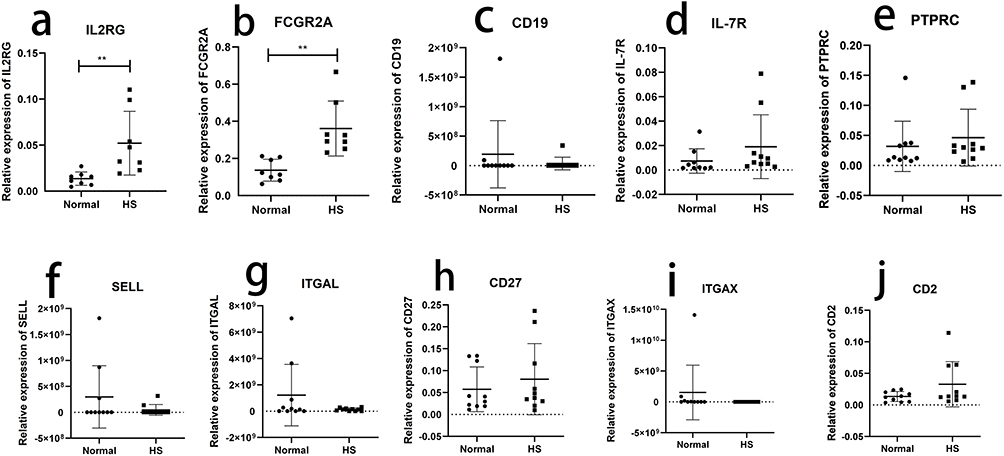
Figure 9a & 9b Legend:
- Figure by: Dr. Yi Ning Zhai and colleagues.
- What it shows: This is the real patient data that confirms the computer model.
- (a) IL2RG: The gene that signals the inflammatory growth (mTOR) pathway. You can see the “HS” patient samples are significantly higher than the “Normal” samples.
- (b) FCGR2A: The “broken garbage disposal” gene. Again, the “HS” samples are significantly higher.
- Key Takeaway: This is the real-world proof that these two genes are in overdrive in our bodies.
The “Aha!” Moment: The Two “Check Engine Lights”
Forget the acronyms. Let’s talk about what these two genes actually do in your body.
1. FCGR2A: The “Broken Garbage Disposal”
- What it is: This gene’s job is to create a garbage disposal unit (a receptor) that sits on the surface of your first responder immune cells, like macrophages and neutrophils.
- What it does: Its specific job is to find and destroy immune complexes. An immune complex is like a handcuff (an antibody) still attached to a suspect (an antigen, like a piece of bacteria or a damaged cell part). It’s the messy aftermath of an immune battle.
- What it means in HS: This gene is shouting, which tells us your body is overwhelmed by these immune complexes. The garbage disposal is spinning out of control because the battlefield is an absolute mess. This inability to clean up the mess is a classic, defining feature of many autoimmune diseases [2]. This finding is more proof that HS is a systemic immune disorder, not just a “clogged pore” problem.
2. IL2RG: The “Inflammatory Growth” Signal (The BIG One)
This is the one I want you to focus on.
- What it is: This gene is an officer that passes on messages to one of the most powerful pathways in your entire body: the PI3K-Akt-mTOR signaling pathway.
- What it does: The mTOR pathway is a master switch that tells your cells to do two things: GROW and INFLAME.
- What it means in HS: The researchers explicitly state that the mTOR pathway shows a close relationship with HS severity and the mechanism of scarring“.
This is the smoking gun.
A Proven natural Roadmap to Manage HS
Get the support and natural strategies you need for lasting relief and join a community that understands.
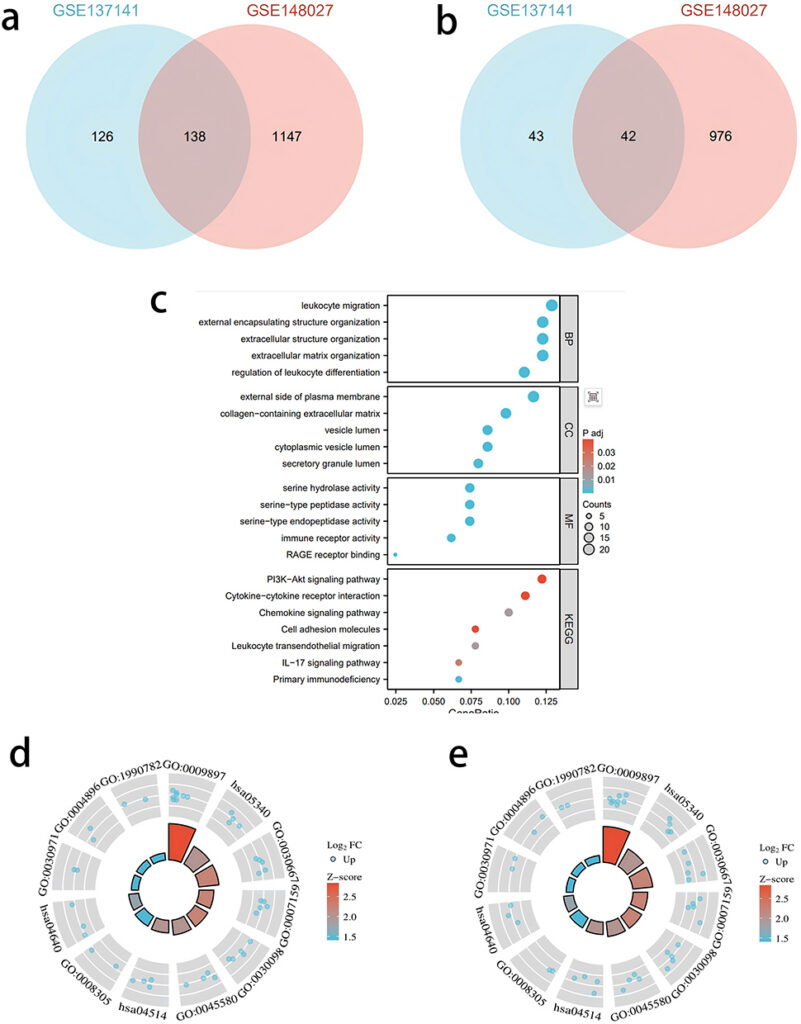
Figure 3c Legend:
- Figure by: Dr. Yi Ning Zhai and colleagues.
- What it shows: Important here is the bottom section (labeled KEGG), it literally lists the key inflammatory pathways that are lit up in HS. You can see the IL-17 signaling pathway and the PI3K-Akt signaling pathway (which contains mTOR) right there. This is the proof.
Why do we get those thick, ropy, hypertrophic scars? Because this mTOR switch is stuck in the “ON” position, telling your cells “GROW!” long after the initial wound.
The researchers also found that other pathways, like the IL-17 pathway [4] (which many biologic drugs target), were also lit up,.
This is an upstream discovery. They found IL2RG was increased and traced it back to the engine (the mTOR pathway).
A Proven natural Roadmap to Manage HS
Get the support and natural strategies you need for lasting relief and join a community that understands.
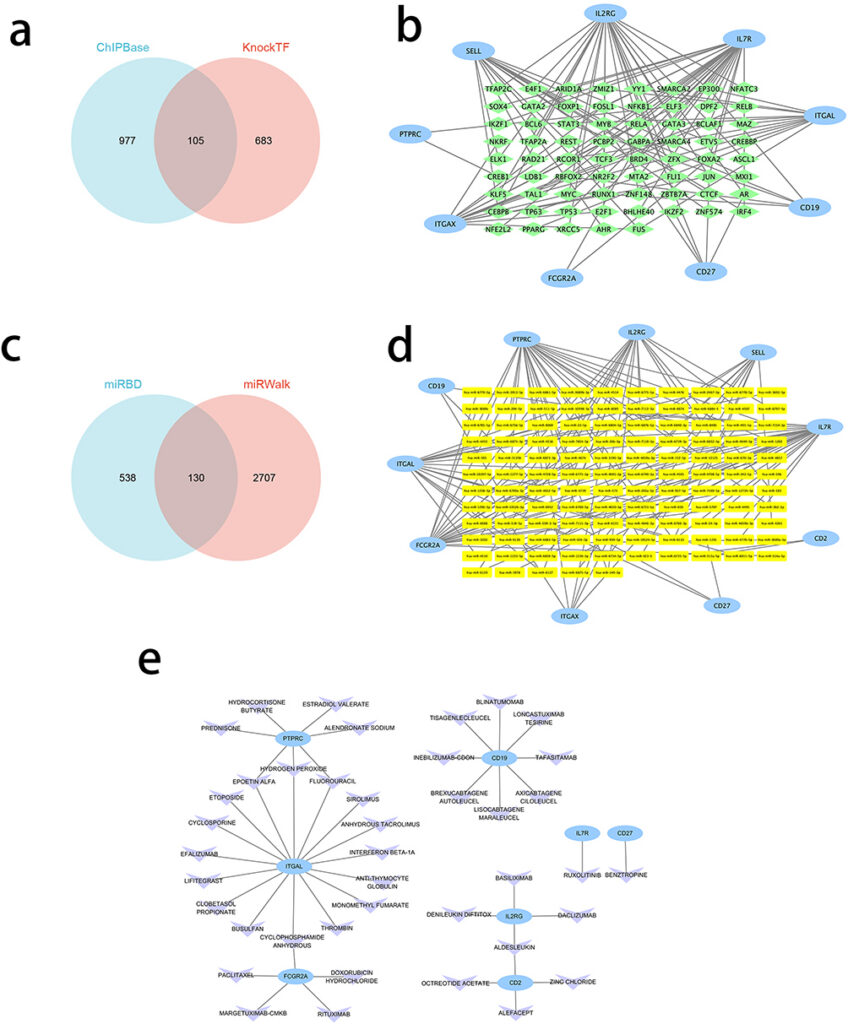
Figure 7e Legend:
- Figure by: Dr. Yi Ning Zhai and colleagues.
- What it shows: This is the “Knowledge Gap” in one picture. The blue dots are the “hub genes” (like
ITGAL,PTPRC,IL2RG). The purple V-shapes are all the drugs they are investigating to target them. Notice the complete absence of “Diet,” “Lifestyle,” or “Nutrition.”
The Knowledge Gap: They Found the Engine, But did not Hand You the Keys
So, the researchers found IL2RG and the mTOR may drive the severity and scarring of your HS.
What’s their proposed solution?
I’ll tell you. The paper identifies 41 potential drugs! It discusses pharmaceuticals that could be developed to target this pathway. They are 100% focused on finding a new, high-tech medication to jam this “on” switch.
This is the Knowledge Gap in its most perfect, frustrating form.
They are staring at a master switch (the mTOR pathway) that is famously and powerfully controlled by diet and lifestyle, and yet they don’t mention it once as a solution. They’d rather spend 10 years and a billion dollars designing a new drug (that will have side effects and wont work for everyone) than tell patients what they can do today.
And the most ironic part? Their own citations prove my point. They cite a 2016 paper by Monfrecola et al. that explicitly links high mTOR expression in HS patients to insulin resistance.
The answer was literally in their own reference list.
A Proven natural Roadmap to Manage HS
Get the support and natural strategies you need for lasting relief and join a community that understands.

The HS Arma Solution: The Real Master Switch
This new paper is the again a great piece of evidence we can add to our list for: why the natural treatment of HS works. It’s not magic. It’s not a coincidence.
The genes are not the master switch. The mTOR pathway is the switch.
And your lifestyle is the hand that flips it.
This is the core philosophy of HS Arma. What is the most powerful, non-pharmaceutical activator of the PI3K-Akt-mTOR pathway in the human body?
Insulin !
Every time you eat a high-sugar meal, drink a glass of milk (which is full of growth hormones and insulin-spiking proteins), or eat highly processed carbohydrates, you spike your insulin.
That insulin spike is the key that turns the PI3K-Akt-mTOR “lock” [3].
Now, imagine you have HS and are eating the standard Western diet. You are spiking your insulin all day, every day. You are personally holding down the “ON” button for the very “master switch” that this paper just proved drives your inflammation and scarring.
How to treat HS? You take your foot off the switch.
This is Layer 1: Foundational Nutrition of the HS Arma program. By adjustng our lifestyle and diet we can systematically removing the primary activators of the mTOR pathway, and totally renovate your metabolism.
Your body’s insulin levels drop. The signal to the master switch goes quiet. The command to “GROW and INFLAME” stops shouting. And as a result, the IL2RG gene stops shouting too.
This is only part of how you stop the fire. This is how you heal your body from the inside out, by targeting the true upstream causes.
A Proven natural Roadmap to Manage HS
Get the support and natural strategies you need for lasting relief and join a community that understands.

Key Takeaways
- A new 2025 genetic study identified two hub genes that are over-active in HS patient tissue: FCGR2A (broken garbage disposal) and IL2RG (an inflammatory growth signal).
- These genes are not the cause of HS, but rather symptoms that signal a deeper problem.
- The IL2RG gene is critical because it’s part of the PI3K-Akt-mTOR pathway, which this paper links directly to HS severity and scarring.
- The Knowledge Gap is that the study only proposes new drugs to target this pathway , even though it’s known to be activated by insulin.
- The natural treatment of HS (like the HS Arma diet) is the true master switch. It works by lowering insulin, which flips off the mTOR pathway, calming the inflammation and stopping the drive for scarring.
This Isn’t a “Genetic Curse.” It’s a Blueprint for Healing.
When people ask, “can you cure HS?” my answer is this: You can put this disease into a deep, lasting remission. I know, because I’ve done it.
This paper should give you incredible hope. Your genetics are not a death sentence. They are a blueprint. And thanks to to this study we can read that blueprint and see the exact biological errors happening.
The conventional path will wait 10 years for a new hidradenitis suppurativa medication to target one of these genes.
The HS Arma model is her for you. You have the power to control the real switch. You can fix the whole system naturally. You can heal.
A Proven natural Roadmap to Manage HS
Get the support and natural strategies you need for lasting relief and join a community that understands.

References
- Zhai YN, Cheng HY, Ma J, et al. Identification and Validation of Hub Genes in Hidradenitis Suppurativa. Clin Cosmet Investig Dermatol. 2025;18:2403-2422. DOI: 10.2147/CCID.5537660
- An, J., et al. (2021). The Emerging Role of Fcγ Receptors in Systemic Lupus Erythematosus. Genes, 12(11), 1739. DOI: 10.3390/genes12111739 (This review explains the role of Fcγ receptors, like FCGR2A, in autoimmunity and the “immune complex” clearance problem).
- Monfrecola G, Balato A, Caiazzo G, et al. Mammalian target of rapamycin, insulin resistance and hidradenitis suppurativa: a possible metabolic loop. J Eur Acad Dermatol Venereol. 2016;30(9):1631-1633. DOI: 10.1111/jdv.13233
- Matusiak L, Szczęch J, Bieniek A, Nowicka-Suszko D, Szepietowski JC. Increased interleukin (IL)-17 serum levels in patients with hidradenitis suppurativa: implications for treatment with anti-IL-17 agents. J Am Acad Dermatol. 2017;76(4):670-675. DOI: 10.1016/j.jaad.2016.10.042
Important Medical Disclaimer
1. Not Medical Advice: All content and information on this website is for informational and educational purposes only. It does not constitute medical advice and is not a substitute for professional diagnosis, treatment, or consultation with a qualified healthcare provider.
2. My Role and Qualifications: I am a biomedical scientist and PhD candidate and share information from that perspective, combined with my personal experience as a patient with Hidradenitis Suppurativa. However, I am not a medical doctor, physician, or registered healthcare professional. Do not consider our relationship a doctor-patient relationship.
3. Consult Your Doctor: Always seek the advice of your medical doctor or another qualified health professional with any questions you may have regarding a medical condition. Never disregard professional medical advice or delay seeking it because of something you have read on this website. If you suspect you are experiencing a medical emergency, or a severe infection, do not rely on this website or the HS Arma community, please call your local emergency services or go to the nearest emergency room immediately.
4. A Critical Warning on Medication: Pharmaceutical drugs are a crucial tool in managing Hidradenitis Suppurativa for many people. Under absolutely no circumstances should you ever alter, reduce, or stop taking your prescribed medication without the explicit direction of the doctor who prescribed it. Doing so can be dangerous. Always consult with your doctor before doing anything related to your treatment plan.
5. No Liability: Your use of this website and reliance on any information provided is solely at your own risk.
6. Individual Results May Vary: Every patient’s biological baseline, genetics, and adherence to the protocol is different. Therefore, I cannot guarantee specific results, cures, or timelines for your Hidradenitis Suppurativa.
7. Scientific and Expressive Freedom: The articles published on this blog are distinct from formal peer-reviewed academic literature. They serve as an independent platform for my personal viewpoints, scientific hypotheses, and philosophical reflections as an independent scientist and HS patient. While grounded in biomedical research, I exercise a degree of expressive freedom to translate rigid academic data into insights from a patient perspective. These writings are my personal meditations on the science of HS and should be read as my individual perspective, not as universally accepted clinical consensus or formal peer-reviewed literature.