
My name is Jaap, and I am a biomedical scientist that also used to live with severe Hidradenitis Suppurativa, the kind that takes over your life. Today, I am completely asymptomatic because I learned how to heal Hidradenitis Suppurativa from within. More importantly, I’ve had the privilege of helping many other individuals with HS get their lives back too.
A Major Update for HS Treatment: A Look at the 2025 European Guidelines
The new 2025 European guidelines for treating Hidradenitis Suppurativa are officially out, and they represent a significant step forward in the medical management of this disease. However, a closer look reveals a critical gap: the very strategies that can address the root cause of HS are still not given the attention they deserve. If you’re serious about understanding how to treat hidradenitis suppurativa from a holistic perspective, it’s vital to know what this new guidance says, what it doesn’t, and why.
Today, we’re going to do a respectful, scientific deep dive into this important document. Let’s explore the progress that’s been made and, more importantly, discuss the opportunities that have been missed.
A Proven natural Roadmap to Manage HS
Get the support and natural strategies you need for lasting relief and join a community that understands.

What Are the 2025 European HS Guidelines and Why Do They Matter?
This new document, titled the “European S2k guidelines for hidradenitis suppurativa/acne inversa part 2: Treatment,” is a major update to the influential guidelines first published in 2015. It’s authored by a large panel of Europe’s most respected dermatologists and HS experts.
This paper matters immensely because it serves as the official playbook for doctors across Europe. It directly influences the treatment decisions they will make for HS patients over the next several years. The guidelines provide a detailed roadmap for medical and surgical options, reflecting the latest advancements. They cover everything from oral antibiotics like tetracyclines to the approval of new biologic drugs like adalimumab, secukinumab, and bimekizumab for moderate-to-severe HS.
For its coverage of conventional medicine, the document is incredibly thorough and a valuable resource. The authors deserve our thanks for compiling such a comprehensive review of the current medical literature.
However, for a disease we know is deeply connected to metabolic dysfunction and systemic inflammation, the official guidance on diet and lifestyle, the upstream causes, remains notably sparse.
A Proven natural Roadmap to Manage HS
Get the support and natural strategies you need for lasting relief and join a community that understands.

The Scientific Gap: Why Isn’t Treating HS Naturally a Priority?
This is where the guidelines present a significant opportunity for future development. Let’s scientifically analyze what the “expert” panel concludes about foundational health strategies.
The document includes a section on “Lifestyle Interventions,” which highlights the current standard of evidence in medicine.
- On Weight Management: The authors correctly cite the strong association between obesity and HS severity. However, they note, “There is no RCT [randomized controlled trial] to confirm whether weight reduction in obese HS patients reduces disease severity.” Because RCTs are the gold standard for medical evidence, the recommendation for weight loss is framed around its “general health benefits,” not as a primary, evidence-based treatment for HS itself. Despite this high bar for evidence, the authors unanimously agreed that weight reduction ‘could be recommended,’ acknowledging its potential impact on HS and its definite benefits for overall health.
- On Smoking Cessation: A similar conclusion is reached here. The undeniable link between smoking and HS is acknowledged, but again, the authors state there is “no RCT providing evidence of the effect of smoking cessation on HS severity.” The recommendation is therefore made based on “overall health benefits.” Even without a specific HS-focused RCT, the connection is so clear that the panel unanimously concluded that smoking cessation ‘should be recommended’ for all patients.
- On Dietary Modification: This is perhaps the most underdeveloped area. The official statement is that “the evidence is insufficient to make a specific recommendation beyond maintaining a healthy weight.” While small studies on dairy and Brewer’s yeast are mentioned, the evidence is deemed “very low” quality by RCT standards. As a result, the guidelines officially conclude with a strong consensus that specific dietary changes ‘are NOT recommended,’ highlighting the major gap between clinical evidence and the experiences of many patients.
This perspective is understandable from a purely conventional medical viewpoint. Without large-scale, expensive RCTs, it is difficult for a guidelines committee to make a strong, official recommendation. The challenge is that such trials for diet and lifestyle are notoriously difficult to fund and conduct.
A Proven natural Roadmap to Manage HS
Get the support and natural strategies you need for lasting relief and join a community that understands.

Adjuvant Treatment: A Misleading Classification?
So, where do these powerful, life-altering interventions fall in the official treatment algorithm?
In the official flowchart, they are placed in a small box at the very bottom, labeled “Adjuvant treatment.” In medical terms, “adjuvant” means “in addition to” the primary, evidence-backed treatment.
While this classification is technically correct based on the lack of RCTs, it creates a potential misunderstanding of Hidradenitis Suppurativa’s nature.
By framing nutrition and lifestyle as optional add-ons, instead of foundational pillars of health, the guidelines may inadvertently steer both doctors and patients away from addressing the underlying drivers of the disease. This is a concept we explore and apply every day in the HS Arma community, where we see firsthand how foundational changes can lead to profound results.
The guidelines are focused on managing the downstream symptoms with excellent, evidence-based drugs and surgeries, but they largely set aside the upstream causes as secondary considerations.
Drugs as a Shield, Not a Cure: A More Integrated Approach
The modern medical model excels at developing targeted drugs for specific inflammatory pathways. It’s an effective and necessary approach, but it may not be the whole picture for a complex condition like HS.
Let me be clear: pharmaceuticals can be life-saving tools and are absolutely essential in many cases to bring severe inflammation under control. They should be viewed as a powerful, temporary shield, not a definitive cure.
A Proven natural Roadmap to Manage HS
Get the support and natural strategies you need for lasting relief and join a community that understands.

If the underlying fire of inflammation isn’t addressed, patients may find themselves cycling through medications, developing drug tolerance, and eventually requiring extensive surgery.
The alternative is a more integrated approach: start addressing the root causes today. This is the core principle behind the natural treatment of hidradenitis suppurativa. Seeing how dietary and lifestyle changes have helped so many in our HS Arma community truly brings this potential to life, showing how we can work with medicine to achieve lasting remission.
A Look at the Official Treatment Flowcharts
To give you a clearer picture of what the guidelines recommend, here’s a breakdown of the two treatment algorithm images provided by the European medical experts.
A Proven natural Roadmap to Manage HS
Get the support and natural strategies you need for lasting relief and join a community that understands.
Image 1: The Plan for Active (Inflammatory) HS
This flowchart shows the step-by-step medical plan based on disease severity, measured by a score called IHS4.
- Mild HS (IHS4 1-3): The first-line recommendation is oral tetracyclines. Other options like topical clindamycin, resorcinol peels, and intralesional steroids are also considered.
- Moderate HS (IHS4 4-10): The plan gets more aggressive. First-line options include clindamycin/rifampicin. Second-line treatments introduce the big guns: biologic drugs like Adalimumab, Secukinumab, and Bimekizumab.
- Severe HS (IHS4 >11): For severe cases, the guidelines jump straight to biologics as a second-line treatment and even suggest powerful IV antibiotics like Ertapenem as a third-line option.
Notice what’s at the very bottom, separated from all the “real” treatments? Adjuvant treatment: smoking cessation, weight reduction, and psychological support and nothing mentioned on nutrition, diet. Lifestyle should be the fist line of defense but are not described in any detail… detail.
A Proven natural Roadmap to Manage HS
Get the support and natural strategies you need for lasting relief and join a community that understands.
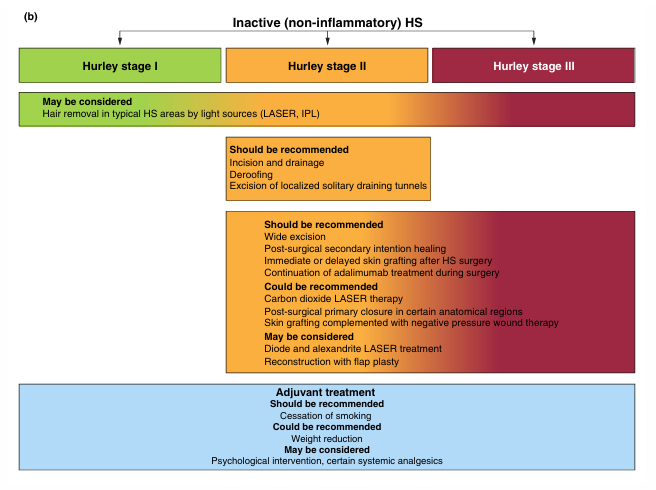
Image 2: The Plan for Inactive (Non-Inflammatory) HS
This chart focuses on surgical and procedural options for when the disease is less about active inflammation and more about structural damage, like tunnels. This is based on the Hurley stage.
- Hurley Stage I: The main suggestion is hair removal with LASER or IPL.
- Hurley Stage II: This is where they recommend procedures like incision and drainage, deroofing, and excision of tunnels.
- Hurley Stage III: For the most advanced stage, the recommendation is wide excision surgery, skin grafting, and other complex reconstructions.
Again, at the bottom of it all, you see the same “adjuvant” lifestyle advice, completely disconnected from the core treatment strategy. This should be the main focus….
Key Takeaways
For a quick summary, here are the most important points:
- The new 2025 European HS guidelines are a significant update from 2015, heavily focused on evidence-based pharmaceutical drugs and surgery, while missing the mark on natural interventions.
- Due to a lack of large-scale clinical trials (RCTs), the guidelines do not strongly recommend diet and lifestyle changes as foundational treatments, dismissing the current evidence as insufficient.
- Lifestyle interventions are classified as “adjuvant” (optional add-ons), which may not fully reflect their potential to address the root causes of inflammation in HS.
- A critical point that is overlooked is that an effective, long-term approach for hidradenitis suppurativa requires integrating nutrition and lifestyle changes to reduce inflammation, while medication serves a supportive role.
Conclusion: An Opportunity for a More Holistic Future
The 2025 guidelines are an excellent reflection of the progress made in the medical and surgical management of HS. However, they also highlight a crucial opportunity for the future: to bridge the gap between managing symptoms and resolving the underlying causes. There is still a need for a deeper appreciation of the environmental triggers that drive this disease.
The path forward involves empowering ourselves with knowledge and beginning to address the root cause today. The journey to treating HS naturally isn’t about rejecting medicine, but about placing it in its proper context, as a valuable shield to use while we do the foundational work of healing from within.
A Proven natural Roadmap to Manage HS
Get the support and natural strategies you need for lasting relief and join a community that understands.

Important Medical Disclaimer
1. Not Medical Advice: All content and information on this website is for informational and educational purposes only. It does not constitute medical advice and is not a substitute for professional diagnosis, treatment, or consultation with a qualified healthcare provider.
2. My Role and Qualifications: I am a biomedical scientist and PhD candidate and share information from that perspective, combined with my personal experience as a patient with Hidradenitis Suppurativa. However, I am not a medical doctor, physician, or registered healthcare professional. Do not consider our relationship a doctor-patient relationship.
3. Consult Your Doctor: Always seek the advice of your medical doctor or another qualified health professional with any questions you may have regarding a medical condition. Never disregard professional medical advice or delay seeking it because of something you have read on this website. If you suspect you are experiencing a medical emergency, or a severe infection, do not rely on this website or the HS Arma community, please call your local emergency services or go to the nearest emergency room immediately.
4. A Critical Warning on Medication: Pharmaceutical drugs are a crucial tool in managing Hidradenitis Suppurativa for many people. Under absolutely no circumstances should you ever alter, reduce, or stop taking your prescribed medication without the explicit direction of the doctor who prescribed it. Doing so can be dangerous. Always consult with your doctor before doing anything related to your treatment plan.
5. No Liability: Your use of this website and reliance on any information provided is solely at your own risk.
6. Individual Results May Vary: Every patient’s biological baseline, genetics, and adherence to the protocol is different. Therefore, I cannot guarantee specific results, cures, or timelines for your Hidradenitis Suppurativa.
7. Scientific and Expressive Freedom: The articles published on this blog are distinct from formal peer-reviewed academic literature. They serve as an independent platform for my personal viewpoints, scientific hypotheses, and philosophical reflections as an independent scientist and HS patient. While grounded in biomedical research, I exercise a degree of expressive freedom to translate rigid academic data into insights from a patient perspective. These writings are my personal meditations on the science of HS and should be read as my individual perspective, not as universally accepted clinical consensus or formal peer-reviewed literature.