

My name is Jaap, and I am a biomedical scientist that also used to live with severe Hidradenitis Suppurativa, the kind that takes over your life. Today, I am completely asymptomatic because I learned how to heal Hidradenitis Suppurativa from within. More importantly, I’ve had the privilege of helping many other individuals with HS get their lives back too.
The Unseen Battle: When Hidradenitis Suppurativa Appears on Your Face
When you hear Hidradenitis Suppurativa, what comes to mind? For most of us, it’s the familiar, painful battlegrounds: the armpits, the groin, beneath the breasts, the buttocks. These are the places we’re told to watch, the areas doctors check first. But what if I told you that HS can show up on the one part of your body you can’t hide? What if it could appear on your face? It’s not just possible; it’s one of the more rare and most misunderstood forms of this disease. Today, we’re going to dive into the science behind facial HS, look at a very sad but also fascinating case study, and discuss how to treat Hidradenitis Suppurativa when it shows up where you least expect it.
The Great Masquerade: Why Facial HS is So Often Misdiagnosed
Hidradenitis Suppurativa on the face is the ultimate chameleon. It can look like severe cystic acne, a deep skin infection, or even a dental problem. Because more rare, many medical doctors may not even have it on their radar. This isn’t a criticism of them; it’s a reflection of just how unusual this presentation is. The result? Months, or even years, of confusion, frustration, and ineffective treatments while the real culprit hides in plain sight.
To understand the challenge, let’s look at a real-world example from a 2021 case report published by Dr. Brian Rankin and Dr. Richard Haber. And first, a huge thank you to these researchers for documenting this case so thoroughly, it’s through this kind of detailed work that we all learn.
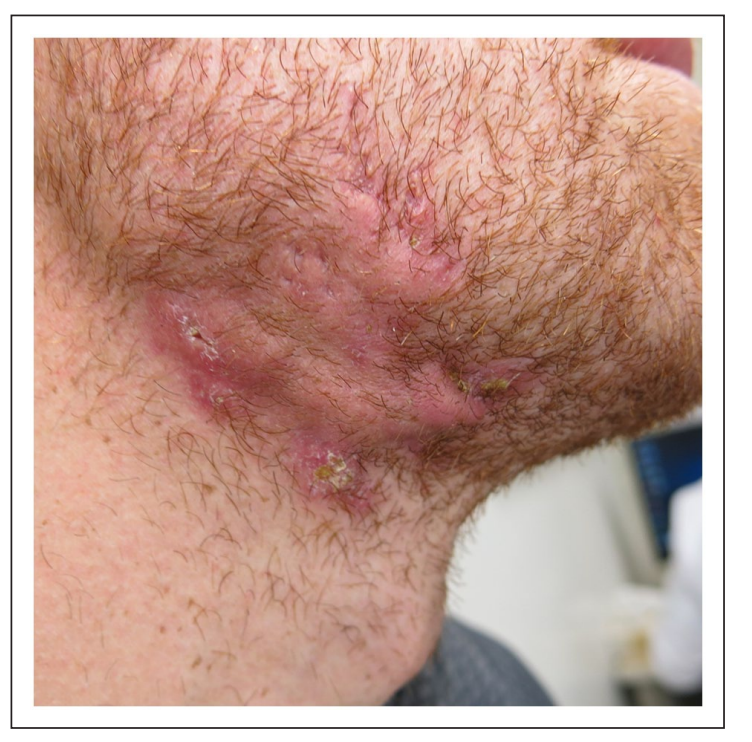
Their report describes a 31-year-old man who went to a clinic with a single, stubborn abscess on his jawline. He had been dealing with this painful, draining mass for four months before he came to the clinic. Four months of uncertainty and discomfort before the diagnostic process even began.
A Proven natural Roadmap to Manage HS
Get the support and natural strategies you need for lasting relief and join a community that understands.
Figure 1 . from the Rankin et al. paper shows the initial lesion. It’s easy to see why this could be mistaken for a standard abscess or severe cystic acne.
The doctors considered everything: a deep fungal infection, tuberculosis, even a dental sinus tract that had tunneled its way to the skin’s surface.
It was only after they took two small punch biopsies that the truth was revealed. The tissue sample showed a deep, squamous-lined cystic structure, a classic, textbook sign of an HS sinus tract. Looking at the histology slide, you can see the evidence that confirmed the diagnosis.
A Proven natural Roadmap to Manage HS
Get the support and natural strategies you need for lasting relief and join a community that understands.
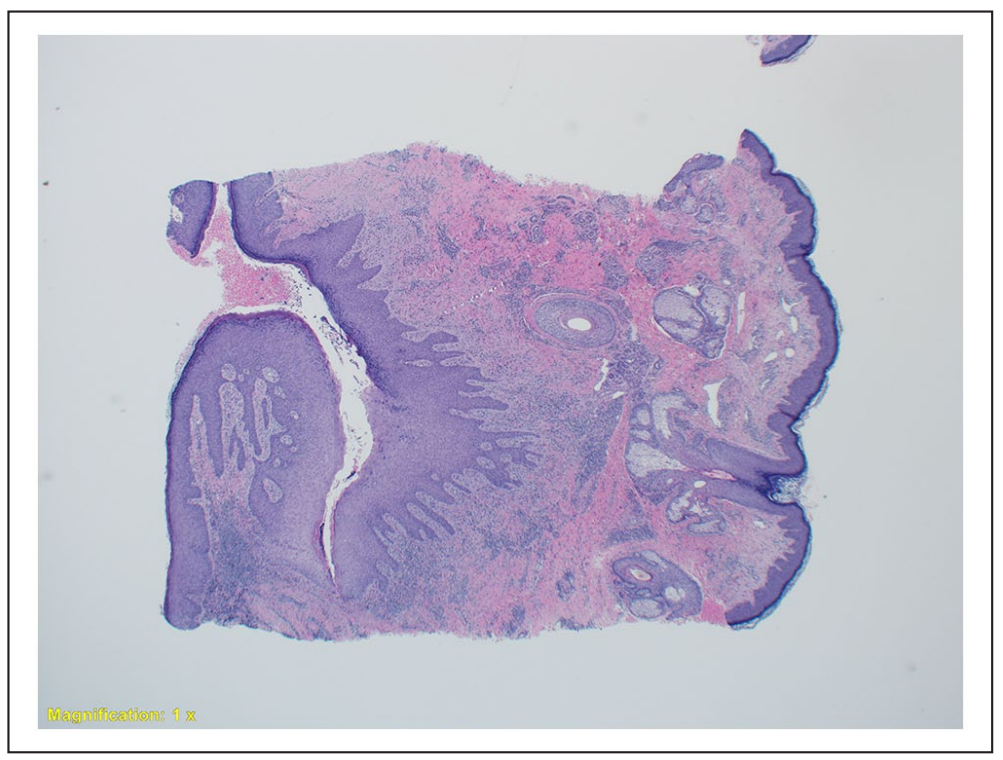
Figure 2. is the biopsy slide. To a pathologist, this cross-section of skin reveals the underlying sinus tract architecture that is a hallmark of HS.
This patient’s journey perfectly illustrates the diagnostic nightmare that facial HS can become. After his four-month ordeal, he was finally put on effective antibiotics. But his story, as frustrating as it is, is sadly a best-case scenario for many.
This is a critical point that we need to talk about. The four-month delay for this patient with a visible facial lesion is just a glimpse into a much larger, systemic problem. For those of us with HS in more “typical” locations like the groin or armpits, the delay can be devastatingly long. It’s a story I hear constantly in our community. The disease is frequently misdiagnosed as simple boils, recurrent infections, or poor hygiene. As a result, many people suffer in silence for years. The average time to get a correct HS diagnosis can be anywhere from 5 to 10 years. Think about that. A decade of pain, confusion, and disease progression before even getting a name for the enemy you’re fighting. It’s no wonder that, as the scientific literature states, “Typically, patients have fought this devastating disease many painfull years by the time they get proper care” This is a reality that has to change.
The Core Question: How Can HS Even Happen on the Face?
This brings us to a crucial scientific question. If HS is so closely linked to areas with apocrine sweat glands (the groin, the armpits), how can it possibly develop on the face?
For decades, HS was called “hidradenitis,” which literally means “inflammation of a sweat gland.” It was believed to be a disease of the apocrine glands. But we now know this is fundamentally wrong.
Modern science, beautifully outlined in research by scientists like Plewig and Kligman, has shown that HS is not a disease of the sweat glands at all. HS is a disease of the terminal hair follicle.
Think of it this way: the entire tragedy of an HS lesion begins with an instability or defect in the lining of the hair follicle. The follicle becomes blocked, inflammation kicks in, and it eventually ruptures. This rupture is like a bomb going off under the skin, creating a massive inflammatory flood that destroys the surrounding tissue. If an apocrine gland happens to be nearby, it gets swallowed up in the chaos, but it was never the cause. It was just an innocent bystander.
This is the key. You don’t need apocrine glands to get HS. You just need terminal hair follicles. And where do we have those? All over our bodies, including on the face, especially in the beard area for men. This is why some scientists have argued for renaming the disease to something more accurate, like dissecting terminal hair folliculitis. It’s a mouthful, but it correctly points the finger at the true culprit: the hair follicle.
A Proven natural Roadmap to Manage HS
Get the support and natural strategies you need for lasting relief and join a community that understands.

Voices from the Reddit: “It Was Such a Shock”
The scientific literature gives us the “what” and the “how,” but it can never fully capture the emotional reality of waking up with a painful, swollen HS lesion on your face. For that, we turn to the real experts: the warriors in the HS community. I recently came across a conversation where someone asked if others had experienced facial HS, and the responses were a powerful reminder that we are not alone and it might be not so rare as described in the paper. because the internet is filled with hidradenitis suppurativa horror stories.
The primary feeling was one of shock and disbelief. As one person put it, “I get them on my face. It was such a shock to discover they can come up there too.” For so long, we’re conditioned to think of HS as a disease of areas “under the skin,” hidden by clothing. When it appears on the cheek, jawline, neck, or even between the eyes, it brings a new level of distress. The fear of scarring becomes paramount. As the original poster wrote, “My usual home treatments still leave scarring that I 100% don’t want on my cheek.”
The experiences shared were raw, sad and deeply unfortunately relatable. One patient described a particularly harrowing flare:
“I have had so many on my face. On right between my eyes the size of a cherry. I looked like I had a fkn horn on my head. Bless every person who tried to continue to look in my eyes and not at that monstrosity.”
That quote hits close to home. Before I healed my hidradenitis suppurativa, I also had several flares that resulted in abscesses on my face. I vividly remember one that formed right between my eyes, a massive, red, and painful lesion that I had to live with for a whole month. To this day, the skin in that spot is still a little damaged, but I consider myself incredibly fortunate that the scarring isn’t more severe and that I no longer have to face that reality.
Another shared the devastating physical toll it can take, especially for men with facial hair:
“I hate to tell you this but my face is literally tearing off in the areas my side burns grow and I have bumps under my beard and I can’t shave.”
A Proven natural Roadmap to Manage HS
Get the support and natural strategies you need for lasting relief and join a community that understands.

But amidst the pain, there was also an incredible exchange of practical advice—the kind of wisdom born from lived experience. One person offered a brilliant tip for minimizing scarring if a lesion needs to be drained: “If you have to get it lanced and it’s in your cheek, I recommend having it lanced from the inside… Wounds in your mouth also heal faster… they’ll numb you and make sure everything is taken out.” Others shared their go-to remedies, from heat and Vicks to hydrocolloid patches and supplements like Zinc and Turmeric. This is the power of community in action.
However, many of these things won’t really help everyone. They might offer some relief for some people, but they are not absolute solutions. Unfortunately, you live with HS for the rest of your life, and you need to fully adopt an HS-appropriate lifestyle. You want to be in the position where there are no flares and thus not hidradenitis suppurativa on your face. This includes many restrictions and practices you have to implement. It’s a journey that takes time and effort, but with a serious attitude and professional help, it can be achieved in months.
Fifteen Years of Pain: A Case of Disfiguring Facial HS
The years spent chasing a diagnosis are a slow-burning tragedy for so many in our community. A 2022 case report from Dr. Gianmarco Capasso and his colleagues reveals the heartbreaking final act of this story, showing what happens when the disease is allowed to progress without the right intervention. Again, my sincere appreciation to these researchers for sharing this case. It is a difficult but necessary story to tell, as it highlights the absolute urgency of early, effective, and root-cause-focused intervention.
They present the case of a man in his 40s who had been battling severe HS for fifteen years. The images are graphic and heartbreaking. They show a face ravaged by the disease, with massive, bridged, and disfiguring scars covering his cheeks, temples, and chin.
A Proven natural Roadmap to Manage HS
Get the support and natural strategies you need for lasting relief and join a community that understands.
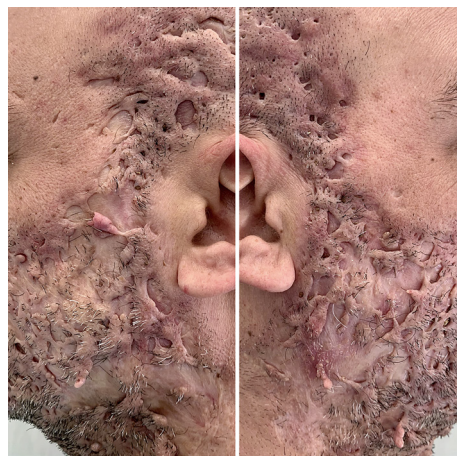
Figure 3. from the Capasso et al. paper. This is the tragic result of 15 years of uncontrolled HS inflammation. This is not just scarring; it is the complete architectural destruction of the skin.
This man’s journey is a textbook example of the systemic failures in conventional HS care.
At age 25, his facial lesions were first diagnosed as conglobate acne. He was put on isotretinoin (a drug similar to Accutane) for over a year with no benefit. Why? Because, as the researchers point out, isotretinoin is “typically ineffective in patients suffering from HS.” It was the wrong diagnosis, and therefore the wrong tool for the job.
It took four more years before he finally received a correct diagnosis of HS, but by then, the damage was accelerating. He was cycled through numerous oral and injectable antibiotics (rifampicin, clindamycin, and others) again, with no clinical benefit. In 2016, he was started on the biologic drug Adalimumab, but after 16 months, his body stopped responding, a phenomenon known as tolerance that is all too common. Besides tolerance these pharmaceutical drugs also have serious side effect, again more reasons to address this disease in natural more clever way like we do in the HS Arma community.
Since then, this man has been left to manage his symptoms with nothing but over-the-counter anti-inflammatory drugs. His Dermatology Quality of Life score was 27, an astronomically high number indicating an almost complete devastation of his quality of life. This man’s story is a harrowing cautionary tale. It is what happens when a disease is misidentified, misunderstood, and mistreated with a symptom-suppression-only model for over a decade.
A Proven natural Roadmap to Manage HS
Get the support and natural strategies you need for lasting relief and join a community that understands.

The Knowledge Gap: Where Conventional Treatment Falls Short
The case study we discussed had another interesting layer: the patient was HIV-positive. The researchers noted that while still rare, people with HIV may be more than six times more likely to have HS, suggesting a deep link between immune dysregulation and the inflammatory pathways that drive this disease.
This brings us to the great knowledge gap in conventional HS treatment. Medical literature and treatment guidelines are getting better at identifying the inflammatory nature of HS. They recommend powerful drugs (steroids, antibiotics, and biologics) that don’t actually solve the real problem but only silence the inflammatory noise. And sometimes, we need that. Those tools can be a temporary shield.
But they rarely address the core problem itself that leads to these flares. The guidelines might mention smoking and weight as factors, but they almost never provide a deep, actionable roadmap for tackling the root causes of the inflammation. This is the HS Arma philosophy. We see drugs and surgery as powerful tools, but not the foundation.
The foundation of lasting remission is a comprehensive anti-inflammatory lifestyle. The goal isn’t just to silence the alarm; it’s to build a body so resilient that the fire doesn’t start in the first place. This is the work we do every day in the HS Arma community, translating this science into practical, life-changing strategies.
A Proven natural Roadmap to Manage HS
Get the support and natural strategies you need for lasting relief and join a community that understands.

Key Takeaways
- HS Can Appear on the Face: While extremely rare, HS can occur exclusively on the face, where it is often misdiagnosed as severe acne or an infection.
- The Emotional and Social Impact of Facial HS is Profound: Because the face is impossible to hide, facial HS carries a unique and severe psychological burden. The post uses community testimonials to highlight feelings of shock, intense fear of permanent scarring, and social anxiety, describing the experience as emotionally harrowing.
- Conventional Treatment Has Critical Gaps: While drugs can manage symptoms, they don’t address the root causes of inflammation. A foundational approach is needed for long-term remission.
- Facial HS is Frequently Misdiagnosed, Leading to Severe Delays in Care: The post strongly emphasizes that HS on the face is often mistaken for severe cystic acne, infections, or even dental issues. This misdiagnosis leads to long and frustrating delays in effective treatment, with the author noting the average time to get a correct HS diagnosis can be a devastating 5 to 10 years.
- A Deeper, Lifestyle-Based Approach is Needed for Lasting Remission: We at HS Arma argue that conventional treatments (steroids, antibiotics, biologics) primarily suppress inflammatory symptoms rather than addressing the root cause. We advocates for a foundational approach centered on a comprehensive, anti-inflammatory lifestyle to build resilience and prevent flares from starting in the first place, and preventing permanent scarring to the face, aiming for lasting remission instead of just symptom management.
A Proven natural Roadmap to Manage HS
Get the support and natural strategies you need for lasting relief and join a community that understands.

Important Medical Disclaimer
1. Not Medical Advice: All content and information on this website is for informational and educational purposes only. It does not constitute medical advice and is not a substitute for professional diagnosis, treatment, or consultation with a qualified healthcare provider.
2. My Role and Qualifications: I am a biomedical scientist and PhD candidate and share information from that perspective, combined with my personal experience as a patient with Hidradenitis Suppurativa. However, I am not a medical doctor, physician, or registered healthcare professional. Do not consider our relationship a doctor-patient relationship.
3. Consult Your Doctor: Always seek the advice of your medical doctor or another qualified health professional with any questions you may have regarding a medical condition. Never disregard professional medical advice or delay seeking it because of something you have read on this website. If you suspect you are experiencing a medical emergency, or a severe infection, do not rely on this website or the HS Arma community, please call your local emergency services or go to the nearest emergency room immediately.
4. A Critical Warning on Medication: Pharmaceutical drugs are a crucial tool in managing Hidradenitis Suppurativa for many people. Under absolutely no circumstances should you ever alter, reduce, or stop taking your prescribed medication without the explicit direction of the doctor who prescribed it. Doing so can be dangerous. Always consult with your doctor before doing anything related to your treatment plan.
5. No Liability: Your use of this website and reliance on any information provided is solely at your own risk.
6. Individual Results May Vary: Every patient’s biological baseline, genetics, and adherence to the protocol is different. Therefore, I cannot guarantee specific results, cures, or timelines for your Hidradenitis Suppurativa.
7. Scientific and Expressive Freedom: The articles published on this blog are distinct from formal peer-reviewed academic literature. They serve as an independent platform for my personal viewpoints, scientific hypotheses, and philosophical reflections as an independent scientist and HS patient. While grounded in biomedical research, I exercise a degree of expressive freedom to translate rigid academic data into insights from a patient perspective. These writings are my personal meditations on the science of HS and should be read as my individual perspective, not as universally accepted clinical consensus or formal peer-reviewed literature.