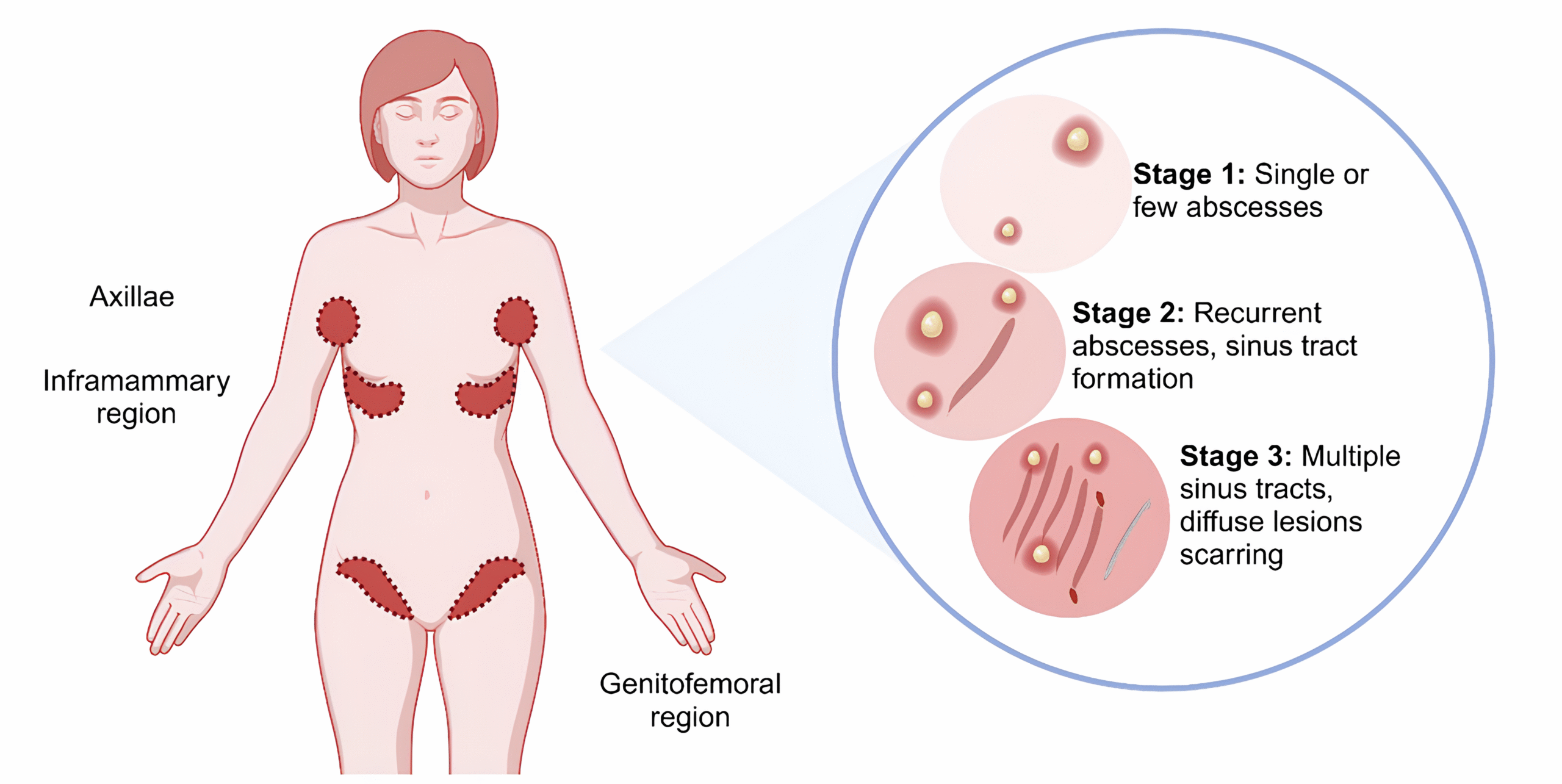

My name is Jaap, and I am a biomedical scientist that also used to live with severe Hidradenitis Suppurativa, the kind that takes over your life. Today, I am completely asymptomatic because I learned how to heal Hidradenitis Suppurativa from within. More importantly, I’ve had the privilege of helping many other individuals with HS get their lives back too.
A Proven natural Roadmap to Manage HS
Get the support and natural strategies you need for lasting relief and join a community that understands.

Introduction
If you’re living with Hidradenitis Suppurativa (HS), you know the frustrating cycle all too well. An area gets tender, swells up into a painful lesion, and eventually ruptures. But instead of healing cleanly, it often leaves behind scars, or even worse, develops into tunnels under the skin. It feels like a relentless, never-ending war being fought in your own body. What if I told you that’s almost exactly what’s happening? New research is finally giving us an unprecedented look at the cellular battleground of HS, and it confirms what many of us have felt for years: this isn’t just a skin problem. This is a deep, systemic immune issue. Understanding this science is the first step in learning how to treat hidradenitis suppurativa at its root, paving the way for a true, lasting natural treatment of HS. In this post, we’re going to dive into some groundbreaking research that explains why HS acts the way it does and how we can use that knowledge to build our path to remission.
A Heartfelt Thank You to the Researchers
Before we get into the details, I want to take a moment to express my deepest gratitude to Dr. Qiu-Jing Zhang and the entire research team at the School of Medicine, Shanghai Jiaotong University, for their incredible work on their 2024 review paper, “Macrophage Polarization and Crosstalk Between Macrophages and Other Cells in Hidradenitis Suppurativa”. Every single study dedicated to this devastating disease moves us forward, and their work provides a beautifully clear framework for understanding the complex immune web of HS. Thank you for your dedication to helping us warriors heal.
A Proven natural Roadmap to Manage HS
Get the support and natural strategies you need for lasting relief and join a community that understands.

Meet the Macrophage: The Two-Faced Cell at the Heart of Hidradenitis Suppurativa
To understand what’s going wrong in HS, we first need to meet the main character in this story: a type of immune cell called a macrophage. Think of macrophages as the general contractors of your body’s repair crew. They are incredibly versatile and can change their job description based on the signals they receive from their environment.
In a healthy state, they exist as neutral M0 macrophages, just waiting for instructions. When an injury or infection occurs, they can polarize, or specialize, into one of two main teams:
- M1 Macrophages (The Demolition Crew): When your body needs to fight an infection or clear out damaged tissue, these are the cells for the job. They are highly pro-inflammatory. Their role is to destroy invaders and break down debris. They are aggressive, effective, and absolutely essential for the first phase of healing.
- M2 Macrophages (The Construction & Repair Crew): Once the threat is gone and the area is cleared, the M1s are supposed to switch off, and the M2s take over. These cells are anti-inflammatory. Their job is to calm things down, promote tissue remodeling, and lay the groundwork for new, healthy tissue to be built. They are the healers.
In a healthy body, this is a beautiful, seamless dance. The demolition crew comes in, does its job, and then the construction crew follows to rebuild everything perfectly.
A Proven natural Roadmap to Manage HS
Get the support and natural strategies you need for lasting relief and join a community that understands.

The M1/M2 Imbalance: Why HS Wounds Don’t Heal
So, what does this have to do with HS? The research shows that in HS lesions, this delicate dance has turned into a chaotic brawl.
HS skin is absolutely flooded with the M1 Demolition Crew macrophages.
This is one of the reasons our lesions become so intensely inflamed, swollen, and painful. These M1 cells are in a state of overdrive, pumping out inflammatory signals (like TNF-α and IL-1β) that scream “ATTACK! ATTACK! ATTACK!”. This relentless assault leads to the breakdown of our skin tissue.
But here’s the critical part: in HS, the switch to the M2 “Construction Crew” fails to happen properly. The M2 macrophage count is significantly decreased in active HS lesions. The signals to calm down and repair are being drowned out by the constant alarm bells of the M1s.
This tells us the problem isn’t just in the skin, it’s a systemic, body-wide issue. This systemic view is a core principle at HS Arma; we know we must calm the entire system to truly heal the skin. Instead of just asking how we can block the M1s, we ask the more important question: Why is the immune system sending these faulty, non-stop attack signals in the first place? Answering that question is the key to lasting remission.
Decoding the Science (Figure 1 Explained): The Vicious Cycle of Destruction and Scarring
The researchers created a fantastic diagram (Figure 1) that illustrates this tragic cycle. It looks complex, but let’s break it down into a simple story.
A Proven natural Roadmap to Manage HS
Get the support and natural strategies you need for lasting relief and join a community that understands.
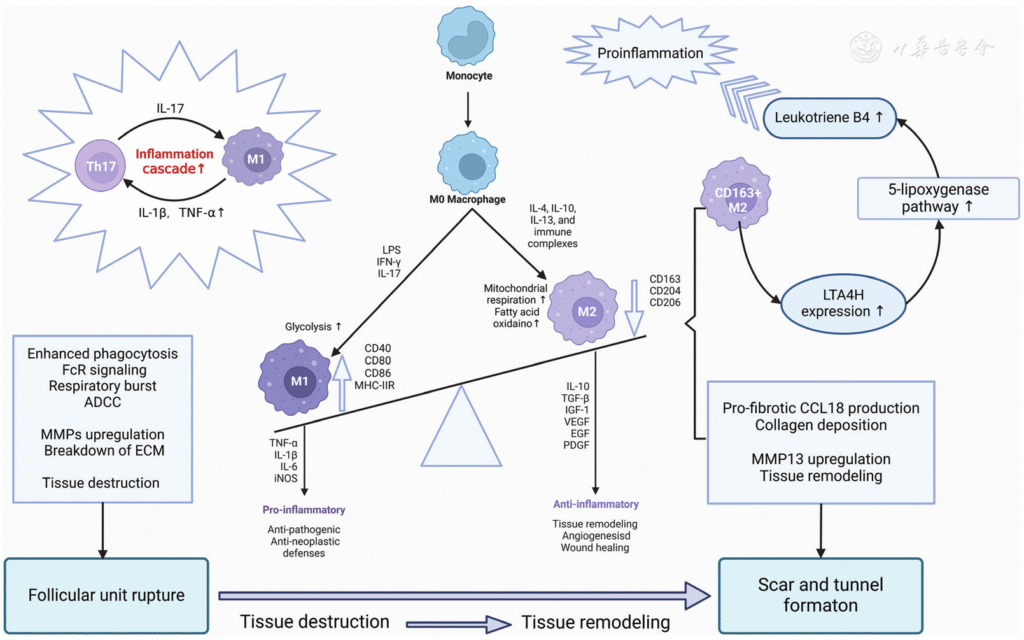
Figure 1 Legend: This figure illustrates the central imbalance of macrophage polarization in Hidradenitis Suppurativa (HS). Unspecialized immune cells called monocytes develop into M0 macrophages. In HS, these cells are overwhelmingly pushed towards the M1 (pro-inflammatory) phenotype, shown on the left. This is driven by inflammatory signals like LPS (from bacteria), IFN-γ, and IL-17. These M1 cells drive tissue destruction by releasing inflammatory molecules (TNF-α, IL-1β), increasing phagocytosis (cell ‘eating’), and upregulating matrix metalloproteinases (MMPs) that break down the skin’s structure. This entire process is correlated with the follicular unit rupture characteristic of an HS lesion. On the right, the path to the M2 (anti-inflammatory/pro-healing) phenotype is shown. While fewer in number, the M2 cells present in HS lesions are associated with tissue remodeling. They release factors like profibrotic CCL18, leading to collagen deposition and tissue remodeling, which in the dysfunctional HS environment contributes to the formation of scars and tunnels. Figure by Qiu-Jing Zhang and colleagues.
The diagram highlights a key finding: the failure of macrophages to transition from the destructive M1 phase to the reparative M2 phase is a major reason for the chronic, non-healing nature of HS.
In simple terms, the left side of the diagram is Act 1: The Explosion. Your M1 macrophages, egged on by other inflammatory cells like Th17, go into overdrive. They break down the extracellular matrix, the scaffolding that holds your skin together.
The right side is Act 2: The Faulty Repair. The few M2 macrophages that are present try to do their job and repair the damage. But in this chaotic, inflammatory environment, their repair signals get crossed. Instead of clean healing, they promote excessive collagen deposition and disordered tissue remodeling. The result? The hypertrophic scars and deep, epithelialized tunnels that are the hallmarks of chronic HS.
It’s a Loud Party in There: How Macrophages “Crosstalk” with Other Cells
Macrophages don’t act alone. They are constantly talking to other cells in the neighborhood, creating feedback loops that can either promote healing or, in the case of HS, perpetuate a cycle of inflammation. The second figure from the paper shows this tangled web of communication, or crosstalk.
A Proven natural Roadmap to Manage HS
Get the support and natural strategies you need for lasting relief and join a community that understands.
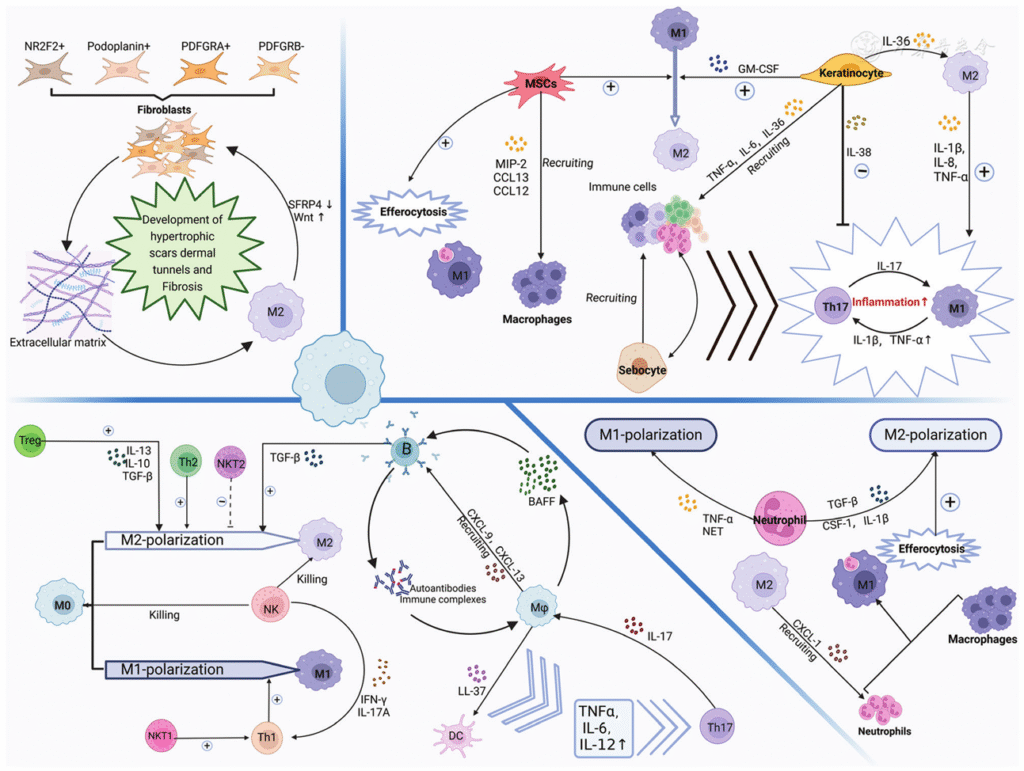
Figure 2 Legend: This comprehensive and beautifull diagram details the intricate “crosstalk” between macrophages and various neighboring cells in the HS microenvironment, illustrating the web of interactions that sustains the disease. Figure by Qiu-Jing Zhang and colleagues.
- Lymphocyte Interactions (The Inflammatory Echo Chamber) (Bottom Left): It shows how different T-cell subsets influence macrophage polarization. Th1 cells and NKT1 cells push towards the pro-inflammatory M1 phenotype. In contrast, Th2 cells, regulatory T cells (Tregs), and TGF-β from B cells can promote the M2 phenotype. A vicious cycle is highlighted where M1 macrophages and Th17 cells amplify each other’s inflammatory signals. In a case of mistaken identity B-cells are also recruited by macrophages and, through autoantibodies, can further activate both M1 and M2 macrophages, contributing to the autoimmune nature of HS.
- Neutrophil Crosstalk (Bottom Right): Neutrophils can promote both M1 polarization (via TNF-α and NETs) and M2 polarization (via efferocytosis, the cleanup of dead neutrophils). This dual role shows their complexity in the HS inflammatory environment.
- Stromal & Epithelial Cell Crosstalk (Top): This section shows how non-immune cells are involved. Keratinocytes (skin cells) can release signals (like GM-CSF and IL-36) that recruit and influence macrophages. Mesenchymal Stem Cells (MSCs) can also recruit macrophages and promote the M2 healing phenotype. Critically, M2 macrophages can interact with Fibroblasts (The Scar Tissue Architects), leading to the excessive extracellular matrix deposition that forms the hypertrophic scars and tunnels unique to HS.
A Proven natural Roadmap to Manage HS
Get the support and natural strategies you need for lasting relief and join a community that understands.

The “Knowledge Gap”: Where Conventional Treatment for Hidradenitis Suppurativa Falls Short
This research is brilliant, but it also reveals the fundamental “knowledge gap” in the conventional approach to HS. Treatments like TNF-alpha inhibitors (biologics) are designed to block the inflammatory signals produced by the M1 macrophages. They are essentially trying to silence the “demolition crew.”
This can provide significant relief and act as a powerful, temporary shield, which is sometimes necessary. But it doesn’t fix the underlying problem. It doesn’t answer the question: Why are the M1s so overactive in the first place? It’s like taking the batteries out of a smoke alarm while the fire is still burning in the basement. The goal isn’t just to silence the alarm; it’s to put out the fire for good.
The HS Arma Philosophy: How to TrulyTreat HS Naturally
This is where the HS Arma philosophy comes in. We see the M1/M2 imbalance not as the primary problem, but as a symptom of a deeper, systemic issue. Our approach is to reverse the conventional model.
Conventional medicine views drugs as the primary treatment, with lifestyle as a small, optional add-on. We believe the foundation of how to treat hidradenitis suppurativa is the reverse. We focus on highly effective, evidence-based nutrition, lifestyle changes, and natural therapies as the main treatment.
We work upstream to identify and remove the triggers that are sending your immune system into a panic. By building a strong foundation of health, we aim to naturally correct the signals being sent to your macrophages. We teach your body to stop screaming ATTACK! and start whispering “heal and repair.” This is how you put out the fire, not just silence the alarm. This is how you build your defenses, layer by layer, so that powerful drugs become less necessary, or ideally, completely unnecessary. This is a core principle we put into practice every day in the HS Arma community.
A Proven natural Roadmap to Manage HS
Get the support and natural strategies you need for lasting relief and join a community that understands.

Key Takeaways
- Hidradenitis Suppurativa is driven by a severe imbalance of immune cells called macrophages. There are too many pro-inflammatory M1 Demolition Crew cells and not enough anti-inflammatory M2 Repair Crew cells.
- This imbalance leads to a two-act tragedy: Act 1 is the painful rupture of the hair follicle driven by M1s. Act 2 is the faulty repair process driven by M2s, leading to the signature scars and tunnels of HS.
- Macrophages are in constant communication with other cells (T-cells, B-cells, fibroblasts), creating a complex, self-perpetuating cycle of inflammation and tissue damage.
- To achieve lasting remission, a natural treatment of HS must focus on addressing the root-cause triggers that are sending these faulty inflammatory signals to your immune system in the first place.
Conclusion
For so long, we have been told that HS is a mysterious disease of the skin. But science like this confirms what we at HS Arma model try to inform about: it is a systemic disease of the immune system. Understanding this doesn’t make it less challenging, but it makes it less mysterious. It gives us a roadmap. It shows us that the power to heal lies not in a magic bullet, but in systematically re-balancing the very system that is causing the damage. Healing is not just possible; it is a logical consequence of addressing the root cause. You can learn to put out the fire, and we at HS Arma are here to show you how.
A Proven natural Roadmap to Manage HS
Get the support and natural strategies you need for lasting relief and join a community that understands.

References
- Zhang, Q.-J., Feng, Y.-B., Chen, X., Mo, X.-H., Wu, Q., & Ju, Q. (2024). Macrophage Polarization and Crosstalk Between Macrophages and Other Cells in Hidradenitis Suppurativa. International Journal of Dermatology and Venereology. Published online March 25, 2024. doi: 10.1097/JD9.0000000000000382.
Important Medical Disclaimer
1. Not Medical Advice: All content and information on this website is for informational and educational purposes only. It does not constitute medical advice and is not a substitute for professional diagnosis, treatment, or consultation with a qualified healthcare provider.
2. My Role and Qualifications: I am a biomedical scientist and PhD candidate and share information from that perspective, combined with my personal experience as a patient with Hidradenitis Suppurativa. However, I am not a medical doctor, physician, or registered healthcare professional. Do not consider our relationship a doctor-patient relationship.
3. Consult Your Doctor: Always seek the advice of your medical doctor or another qualified health professional with any questions you may have regarding a medical condition. Never disregard professional medical advice or delay seeking it because of something you have read on this website. If you suspect you are experiencing a medical emergency, or a severe infection, do not rely on this website or the HS Arma community, please call your local emergency services or go to the nearest emergency room immediately.
4. A Critical Warning on Medication: Pharmaceutical drugs are a crucial tool in managing Hidradenitis Suppurativa for many people. Under absolutely no circumstances should you ever alter, reduce, or stop taking your prescribed medication without the explicit direction of the doctor who prescribed it. Doing so can be dangerous. Always consult with your doctor before doing anything related to your treatment plan.
5. No Liability: Your use of this website and reliance on any information provided is solely at your own risk.
6. Individual Results May Vary: Every patient’s biological baseline, genetics, and adherence to the protocol is different. Therefore, I cannot guarantee specific results, cures, or timelines for your Hidradenitis Suppurativa.
7. Scientific and Expressive Freedom: The articles published on this blog are distinct from formal peer-reviewed academic literature. They serve as an independent platform for my personal viewpoints, scientific hypotheses, and philosophical reflections as an independent scientist and HS patient. While grounded in biomedical research, I exercise a degree of expressive freedom to translate rigid academic data into insights from a patient perspective. These writings are my personal meditations on the science of HS and should be read as my individual perspective, not as universally accepted clinical consensus or formal peer-reviewed literature.