My name is Jaap, and I am a biomedical scientist that also used to live with severe Hidradenitis Suppurativa, the kind that takes over your life. Today, I am completely asymptomatic because I learned how to heal Hidradenitis Suppurativa from within. More importantly, I’ve had the privilege of helping many other individuals with HS get their lives back too.
A Proven natural Roadmap to Manage HS
Get the support and natural strategies you need for lasting relief and join a community that understands.
Have you ever looked at your skin during a flare and felt like you were in the middle of a war zone? The pain, the inflammation, the exhaustion, it feels like a relentless battle. What if I told you that feeling is closer to the truth than you might think? And what if understanding the secret chaos happening deep within your skin could finally show you how to treat hidradenitis suppurativa at its root?
A groundbreaking study, led by the brilliant Dr. Angel S. Byrdand her team at Johns HopkinsUniversity, has peeled back the layers of HS, revealing a level of immune dysregulation that is truly stunning ¹. This isn’t just a simple skin infection or a problem of “clogged pores.” This research confirms what so many of us have felt in our bones for years: HS is a deep, systemic, and complex immune disease.
Today, we’re going to walk through this fascinating research together. We’ll translate the dense science into a clear story, connect it to your personal healing journey, and uncover why a natural, root-cause approach isn’t just an alternative, it’s the most logical, science-backed path forward.
The First Domino: Neutrophils and Their Deadly “NETs”
First, a huge thank you to Dr. Byrd and her entire team for dedicating their work to understanding hidradenitis suppurativa. Research like this moves the needle for our entire community, and for that, we are incredibly grateful.
Their investigation starts with a key player in our immune system: the neutrophil. Think of neutrophils as the immune system’s first responders or foot soldiers. When there’s an injury or infection, they rush to the scene. In HS, we’ve known for a while that our lesions are packed with these cells. But this study asked a more important question: what are they doing there?
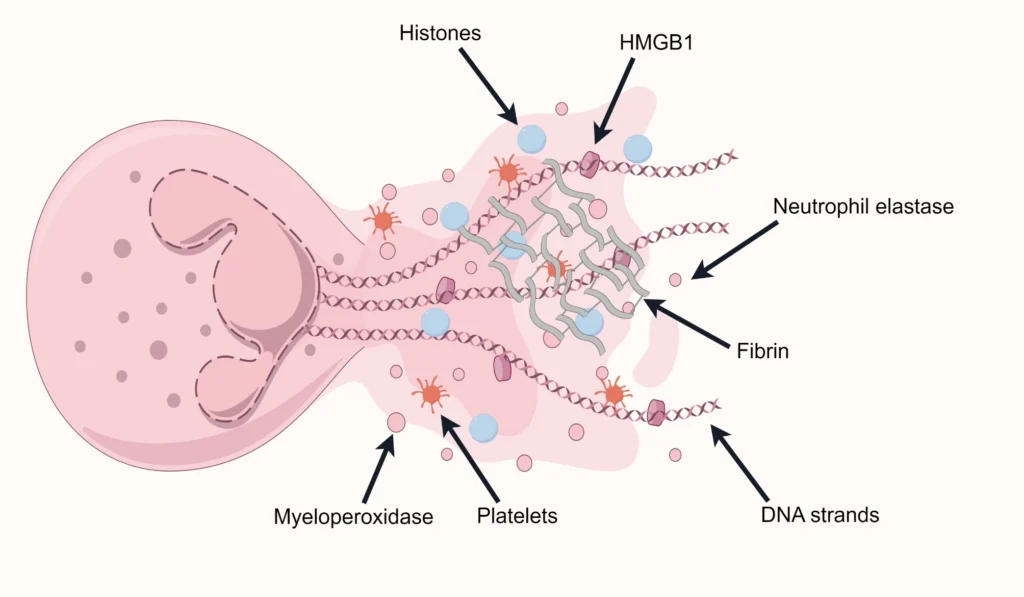
The answer is both fascinating and alarming. The researchers found that neutrophils in HS patients are “primed” and hyperactive. They are engaging in a process called NETosis, where they essentially explode, casting out web-like structures made of their own DNA called Neutrophil Extracellular Traps (NETs).
A Proven natural Roadmap to Manage HS
Get the support and natural strategies you need for lasting relief and join a community that understands.
Figure 1. Neutrophil Extracellular Traps (NETs) are web-like structures that neutrophils release into the extracellular space. These traps are formed from a neutrophil’s own decondensed chromatin, which creates a scaffold decorated with proteins from its azurophilic granules, including neutrophil elastase, myeloperoxidase, and high-mobility group box 1 (HMGB1). In addition to their role in immunity, NETs exhibit significant procoagulant properties, meaning they promote blood clot formation and can be found intertwined with activated platelets and fibrin. Illustration by Zhanrui Liu and colleagues.
Imagine a spider casting a sticky web to trap a fly. That’s what a healthy neutrophil does to trap bacteria, fungi and other intruders. But in HS, it’s like there are millions of spiders casting webs everywhere, for no good reason. These NETs are not just trapping pathogens; they are creating a sticky, inflammatory mess that damages our own tissue.
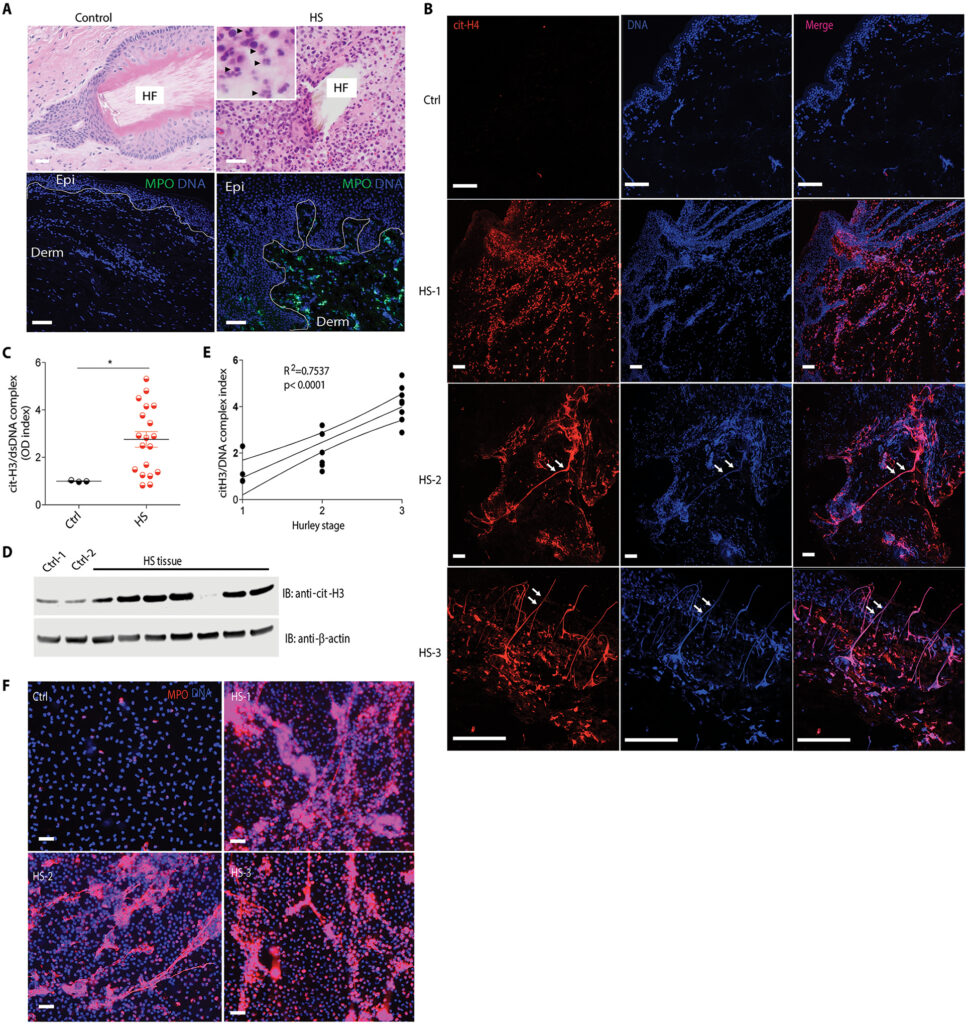
The researchers found that HS lesions are absolutely littered with these NETs, while healthy skin has none. Even more telling, the amount of NETs directly correlated with disease severity, the higher the Hurley stage, the more NETs were present (Figure 1). This isn’t just a side effect; it’s a central feature of the disease’s progression.
A Proven natural Roadmap to Manage HS
Get the support and natural strategies you need for lasting relief and join a community that understands.
This figure is the first piece of visual evidence that shows the chaos in HS skin. Figure by Dr. Angel S. Byrd andcolleagues.
Panel A: On the left, you see a microscope image of healthy skin, calm and organized around a hair follicle (HF). On the right is HS skin. The little dark specks pointed out by the arrows are swarms of neutrophils, our immune system’s first responders, crowding the area. The bottom images use a fluorescent stain for Myeloperoxidase (MPO, in green), a protein specific to neutrophils, confirming their massive presence in the dermis (Derm) of HS skin compared to the control.
Panel B: This is the showstopper. The researchers used a special stain for “citrullinated histone H4” (cit-H4, in red), a key marker for NETs. Healthy skin (Ctrl) is dark. But the HS skin samples (HS-1, HS-2, HS-3) are on fire with red, showing that the skin is filled with these DNA webs. The arrows point to the stringy, web-like structure of the NETs.
Panel C & D: These graphs provide the numbers to back up the images. The researchers measured the amount of NETs (as cit-H3/DNA complexes) in homogenized skin tissue. The result is clear: HS tissue has significantly more NETs than control tissue.
Panel E: This graph is critically important for us as patients. It plots the amount of NETs against the Hurley stage of the disease. The line goes up and to the right, showing a strong positive correlation. In simple terms: more NETs means more severe disease.
Panel F: The researchers looked at neutrophils from the blood of HS patients and found that even outside the skin, these cells were spontaneously forming NETs compared to neutrophils from healthy controls. This tells us the problem isn’t just in the skin—it’s a systemic, body-wide issue. This systemic view is a core principle at HS Arma; we know we must calm the entire system to truly heal the skin.
A Case of Mistaken Identity: The Rise of Autoantibodies in HS
So, our skin is filled with these inflammatory DNA webs. But the story doesn’t end there. When these NETs are formed, the proteins within them get modified through a process called citrullination. Think of it like putting a different hat on a protein. It’s still the same protein, but it looks different to the immune system.
And here’s where Hidradenitis Suppurativa starts to look a lot like a classic autoimmune disease.
The immune system, seeing these “weird-looking” citrullinated proteins, mistakes them for foreign invaders and creates autoantibodies to attack them. This is a case of friendly fire on a massive scale.
This study revealed two stunning findings:
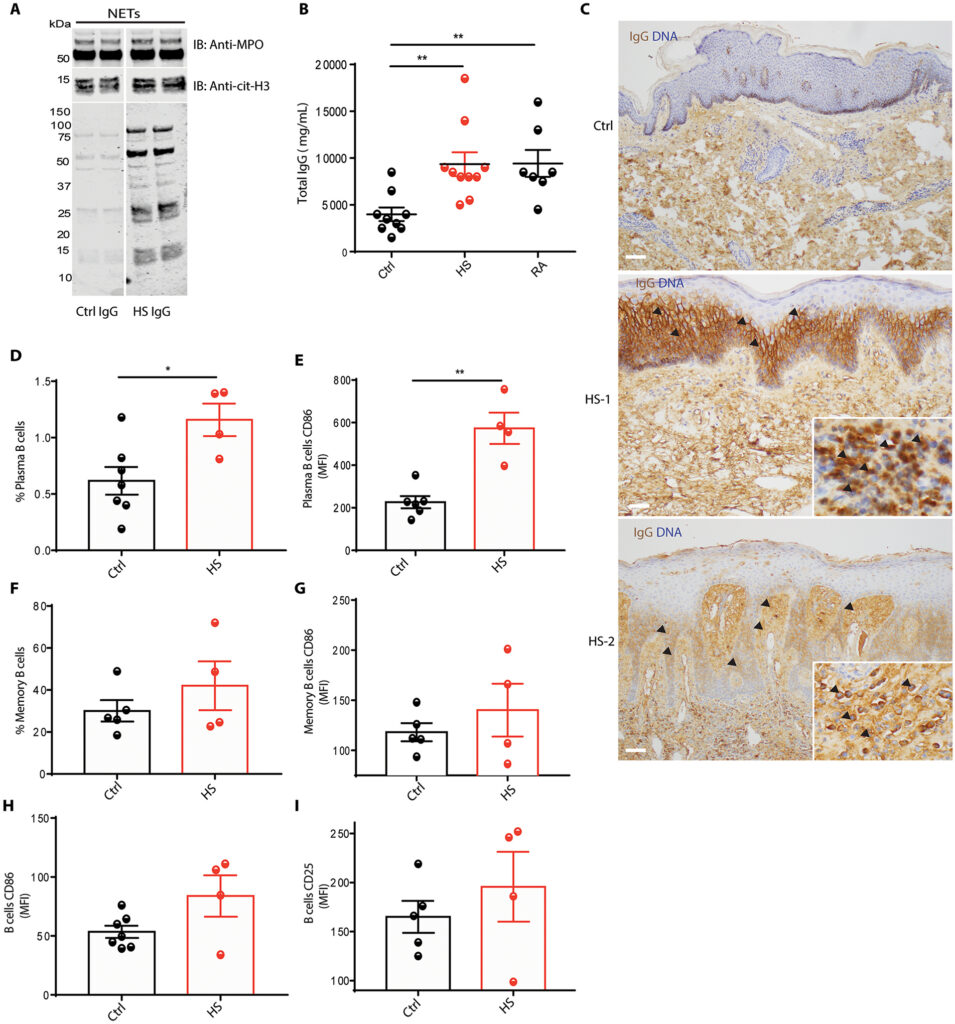
HS patients have autoantibodies that specifically target proteins found in NETs (Figure 2). Your body is literally creating weapons to attack the debris from its own rogue immune cells.
HS patients have significantly higher levels of anti-CCP antibodies, the same type of autoantibodies that are a hallmark of Rheumatoid Arthritis (RA) (Figure 3). While the levels weren’t as high as in RA, the fact that they are present at all is a massive confirmation that HS has an autoimmune component.
This is why you feel so sick. It’s not just a boil. It’s your immune system attacking itself. The researchers also found that HS patients have more circulating plasma B-cells, the very immune cells responsible for pumping out these autoantibodies (Figure 2). This isn’t an accident; it’s a coordinated, albeit misguided, immune response. This finding gets right to the heart of the “HS Arma” philosophy. Instead of just asking how we can block these B-cells, neutrophils and antibodies with powerful drugs, we ask the more important question: Why is the immune system making these mistakes in the first place? Answering that question is the key to lasting remission.
“Health is not a matter of chance; it is a matter of choice.” – Dr. Joel Fuhrman, 2003
A Proven natural Roadmap to Manage HS
Get the support and natural strategies you need for lasting relief and join a community that understands.
This figure shows the consequences of all those NETs, a full-blown B-cell and antibody response against our own bodies. Figure by Dr. Angel S. Byrd andcolleagues.
Panel A: Researchers took NETs, separated their proteins, and exposed them to serum (the part of blood with antibodies) from healthy people (Ctrl IgG) and HS patients (HS IgG). The dark bands show where antibodies are binding. The HS serum lit up, binding to many more proteins in the NETs than the control serum did. This is direct proof that we have autoantibodies against NET components.
Panel B: A simple but powerful graph. It shows the total amount of Immunoglobulin G (IgG), the most common type of antibody, in the blood. HS patients have significantly more IgG than healthy controls, indicating a ramped-up antibody response.
Panel C: This is a slice of HS skin stained for IgG (the brown color). You can see it deposited in the epidermis and also see IgG-positive plasma cells (the antibody factories, marked by arrows) infiltrating the tissue.
Panels D-I: This is data from flow cytometry, a technique that counts and characterizes individual cells. The results are clear: compared to controls, HS patients have a significantly higher percentage of plasma B cells (Panel D), and these cells are more activated (Panel E, showing CD86 expression). This confirms our bodies are in high gear producing antibodies.
A Proven natural Roadmap to Manage HS
Get the support and natural strategies you need for lasting relief and join a community that understands.
Here, the researchers dig deeper into what exactly these autoantibodies are targeting. Figure by Dr. Angel S. Byrd andcolleagues.
Panel A: This is a pivotal finding. It shows the results of a clinical anti-CCP test, the gold standard for diagnosing Rheumatoid Arthritis (RA). While RA patients have very high levels, HS patients also have significantly elevated levels compared to healthy controls. This strongly suggests a shared autoimmune pathway.
Panels B-E: Using a more advanced assay, the scientists tested for antibodies against specific citrullinated proteins (vimentin, fibrinogen, filaggrin, and enolase). In every case, HS patients had significantly higher levels of these autoantibodies than controls.
Panel F & G: These “heat maps” show the autoantibody signature of HS patients. Red means high levels of a specific antibody. Panel G is particularly interesting because it clusters the patients by Hurley stage. You can see that different stages of the disease are associated with different patterns of autoantibodies.
The Engine of Citrullination: Overactive PAD Enzymes
If citrullination (modification of proteins) is the process that creates these rogue proteins that can generate autoantibodies, what’s the engine driving it? The researchers looked for the enzymes responsible, called Peptidylarginine Deiminases (PADs).
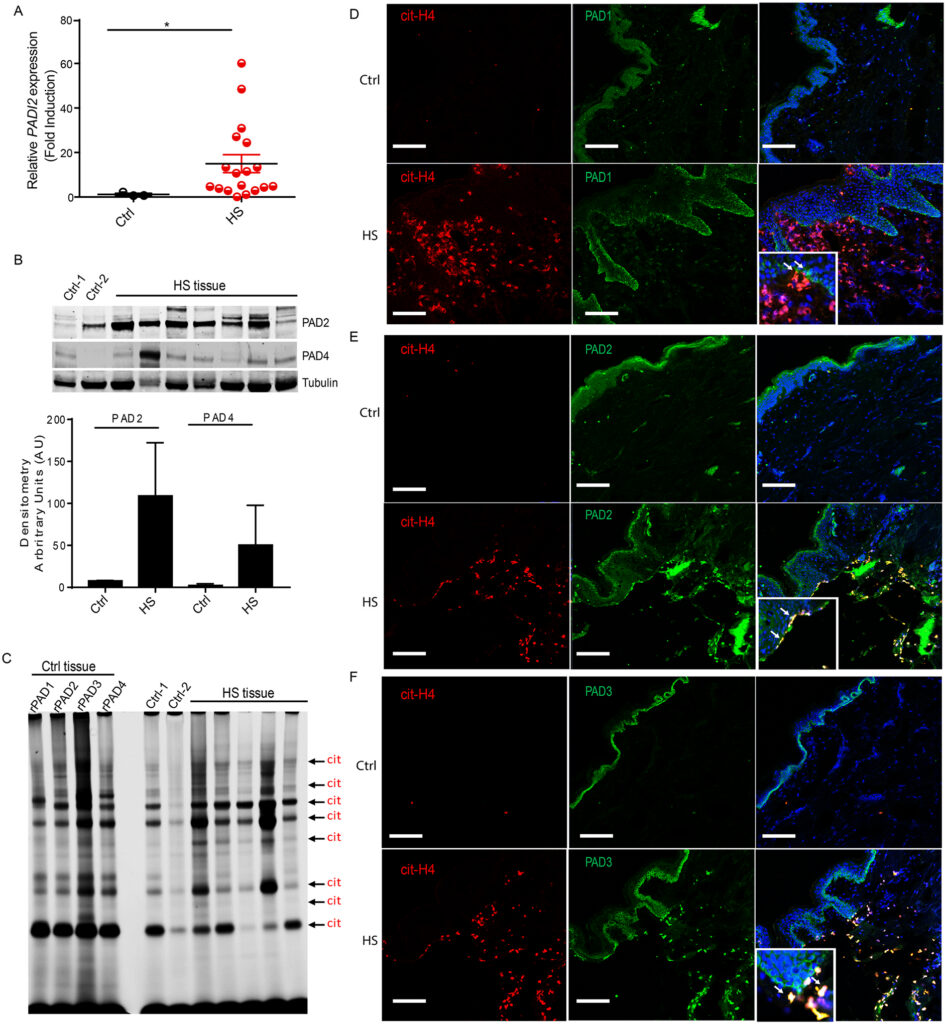
They found that the genes and protein levels for PAD2 and PAD4, the exact PADs involved in making NETs and citrullinating proteins, were significantly elevated in HS skin (Figure 4).
This is the molecular smoking gun. It shows that the machinery for creating the very autoantigens that trigger the autoimmune response is switched on and running in overdrive right where the disease is most active. It’s a self-sustaining cycle of inflammation: neutrophils arrive, PAD enzymes get activated, proteins get citrullinated, NETs are formed, the immune system creates autoantibodies against them, and this recruits even more inflammatory cells to the area.
A Proven natural Roadmap to Manage HS
Get the support and natural strategies you need for lasting relief and join a community that understands.
Figure 4 Legend: Identifying the Citrullination Factory
This figure zeroes in on the PAD enzymes, the molecular machines that create citrullinated proteins. Figure by Dr. Angel S. Byrd andcolleagues.
Panel A & B: These panels measure the amount of PAD enzymes in HS skin versus control skin. Whether looking at the gene level (PADI2, Panel A) or the protein level (PAD2 and PAD4, Panel B), the story is the same: HS skin has much more of these enzymes.
Panel C: This is an activity assay. Researchers used a special probe that glows when it finds a citrullinated protein. The lanes with HS tissue light up with many more bands than the control lanes, proving that these overabundant PAD enzymes are also highly active and are citrullinating a wide range of proteins in the skin.
Panels D-F: These images show precisely where the PAD enzymes (green) and NETs (red) are located in the skin. In HS skin, you can see the PADs are right in the thick of it, co-localizing with the NETs (seen as yellow/orange where green and red overlap). This visualizes the engine of citrullination right at the scene of the crime.
The Blaring Alarm: A Type I Interferon Signature
There’s one more piece to this puzzle. The researchers looked for another key immune pathway: Type I Interferons (IFNs). Think of these as a body-wide emergency broadcast system. They are typically released during a viral infection to put the entire immune system on high alert.
NETs, being rich in DNA, can trick the immune system into thinking there’s a virus present. When NETs are sensed by other immune cells called plasmacytoid dendritic cells (pDCs), these pDCs can pump out huge amounts of Type I IFN.
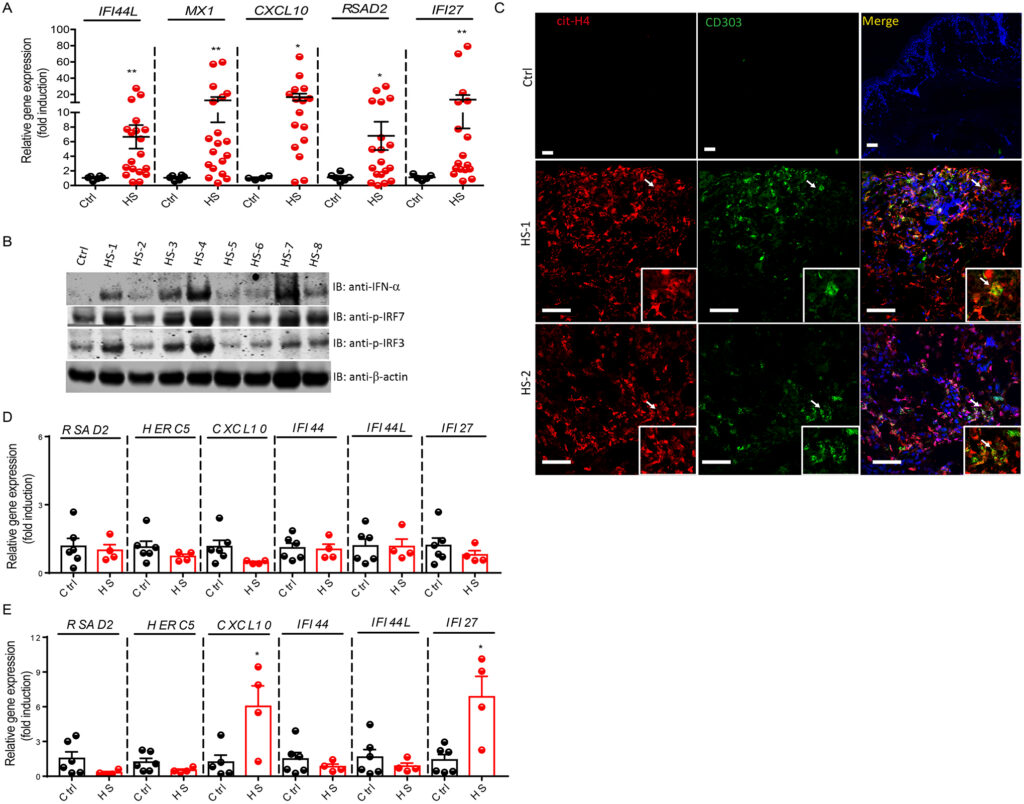
And that’s exactly what the team found. HS skin has a powerful Type I IFN gene signature (Figure 5). The emergency alarm is blaring, but it’s a false alarm triggered by our own cells. Interestingly, this signature was found in the skin lesions and in peripheral blood neutrophils, but not in the blood serum itself. This means the alarm is most intense at the site of the battle, right in our skin, further fueling the local inflammation.
A Proven natural Roadmap to Manage HS
Get the support and natural strategies you need for lasting relief and join a community that understands.
This final figure reveals another layer of immune chaos: the inappropriate activation of the anti-viral interferon system. Figure by Dr. Angel S. Byrd andcolleagues.
Panel A: This shows the gene expression levels for several classic Type I IFN-stimulated genes (like IFI44L, MX1, CXCL10). In every case, HS skin has dramatically higher expression than control skin. This is the “gene signature” that proves the interferon alarm system is switched on.
Panel B: This Western blot looks for the activated proteins (p-IRF3 and p-IRF7) that act as master switches for the interferon response. Again, they are much more present in HS tissue, confirming the pathway is active.
Panel C: This provides a potential mechanism. The image shows NETs (red) in close proximity to, and even co-localizing with, pDCs (green, marked by CD303), the immune cells famous for producing Type I IFN. The arrows point to this interaction, suggesting the NETs are the ones triggering the pDCs to sound the alarm.
Panels D & E: The researchers tested blood cells to see if the alarm was systemic. While general immune cells in the blood (PBMCs, Panel D) didn’t show a strong signature, the neutrophils themselves (Panel E) did show an increase in some of these genes. This reinforces the idea that neutrophils are central to this entire dysfunctional process.
A Proven natural Roadmap to Manage HS
Get the support and natural strategies you need for lasting relief and join a community that understands.
This research is phenomenal. It gives us a beautiful, detailed map of the what and the how of the inflammatory chaos in HS. It validates our experience and proves that this is a serious autoimmune/autoinflammatory disease. But it also highlights the knowledge gapin conventional medicine.
The standard approach looks at this map and says, Let’s block the interferon, or Let’s block the cytokines that call in the neutrophils. These are the drugs that act like a temporary shield. They try to silence the smoke alarm.
Our philosophy at HS Arma is different. We look at this map and we ask why.
Why are our neutrophils so primed and angry in the first place?
Why is our immune system so on edge that it mistakes our own proteins for enemies?
The conventional model sees lifestyle as a small, optional piece of the puzzle. We reverse this. At HS Arma, we focus on highly effective evidence-based nutrition and lifestyle changes, and natural therapies and practices as the main treatment. This research, by showing us the out-of-control neutrophils and the subsequent autoimmune cascade, makes an incredibly strong case for our inside-out approach. The goal must be to calm the entire system down at a foundational level, to put out the fire, not just silence the alarm, and ultimately prevent he neutrophils from being activated and creeping from the blood into you skin tissue.
A Proven natural Roadmap to Manage HS
Get the support and natural strategies you need for lasting relief and join a community that understands.
Seeing this science makes the mission of our community even clearer. It’s about building a protective shield for yourself, piece by piece, to address the root causes of this immune chaos.
Foundational Nutrition: This research shows an immune system on high alert. The first step is to stop adding fuel to the fire. We identify your personal inflammatory trigger foods and provide your body with the nutrient-dense building blocks it needs to find balance.
Strategic Lifestyle Changes: The primed state of your neutrophils and the IFN signature point to systemic stress. This layer focuses on managing stress, optimizing sleep, and reducing toxic exposures to calm your immune system’s overactive state.
Natural Therapies & Skincare: We can use nature’s intelligence to our advantage. This layer involves science-backed natural compounds and supplements that help reduce systemic inflammation and support immune balance, directly targeting the dysfunction this paper highlights.
Accountability & Support: Understanding this science is empowering, but the journey is hard. This layer is about having the support and guidance to stay the course, knowing you are not alone.
Key Takeaways
If you’re short on time, here are the crucial points from this research:
HS is a disease of hyperactive immune cells. Specifically, neutrophils in HS patients are releasing inflammatory webs of DNA called NETs inside the skin, and the amount of NETs correlates with disease severity.
HS has a clear autoimmune component. The body creates autoantibodies against proteins released in these NETs, including the same type of antibodies found in Rheumatoid Arthritis.
A “false alarm” is making things worse. The NETs trigger an anti-viral alarm system in the skin (the Type I Interferon pathway), pouring gasoline on the inflammatory fire.
True healing requires a root-cause approach. This detailed map of inflammation shows that simply blocking one pathway is not enough. We must ask why the immune system is so dysregulated and why do these cells misbehave so badly, and work to restore balance from the inside out.
Conclusion: Hope Through Understanding
This research is more than just data; it’s validation. It’s proof that the debilitating fight you’re experiencing is real, complex, and rooted in profound immune dysfunction. But it is also a beacon of hope.
By understanding the battlefield, we can finally develop the right strategy to win the war. The science shows us that we need to do more than just manage symptoms. We need to calm our overactive neutrophils, re-educate our immune system, and extinguish the inflammatory fire for good.
This is the heart of what we do in the HS Arma protocol. We take this incredible science and turn it into an actionable plan. Remission is not a myth. Healing is possible. And it starts with understanding the beautiful, scary and complex war happening inside you, and giving your body the tools it needs to finally find peace.
A Proven natural Roadmap to Manage HS
Get the support and natural strategies you need for lasting relief and join a community that understands.
1. Not Medical Advice: All content and information on this website is for informational and educational purposes only. It does not constitute medical advice and is not a substitute for professional diagnosis, treatment, or consultation with a qualified healthcare provider.
2. My Role and Qualifications: I am a biomedical scientist and PhD candidate and share information from that perspective, combined with my personal experience as a patient with Hidradenitis Suppurativa. However, I am not a medical doctor, physician, or registered healthcare professional. Do not consider our relationship a doctor-patient relationship.
3. Consult Your Doctor: Always seek the advice of your medical doctor or another qualified health professional with any questions you may have regarding a medical condition. Never disregard professional medical advice or delay seeking it because of something you have read on this website. If you suspect you are experiencing a medical emergency, or a severe infection, do not rely on this website or the HS Arma community, please call your local emergency services or go to the nearest emergency room immediately.
4. A Critical Warning on Medication: Pharmaceutical drugs are a crucial tool in managing Hidradenitis Suppurativa for many people. Under absolutely no circumstances should you ever alter, reduce, or stop taking your prescribed medication without the explicit direction of the doctor who prescribed it. Doing so can be dangerous. Always consult with your doctor before doing anything related to your treatment plan.
5. No Liability: Your use of this website and reliance on any information provided is solely at your own risk.
6. Individual Results May Vary: Every patient’s biological baseline, genetics, and adherence to the protocol is different. Therefore, I cannot guarantee specific results, cures, or timelines for your Hidradenitis Suppurativa.
7. Scientific and Expressive Freedom: The articles published on this blog are distinct from formal peer-reviewed academic literature. They serve as an independent platform for my personal viewpoints, scientific hypotheses, and philosophical reflections as an independent scientist and HS patient. While grounded in biomedical research, I exercise a degree of expressive freedom to translate rigid academic data into insights from a patient perspective. These writings are my personal meditations on the science of HS and should be read as my individual perspective, not as universally accepted clinical consensus or formal peer-reviewed literature.