My name is Jaap, and I am a biomedical scientist that also used to live with severe Hidradenitis Suppurativa, the kind that takes over your life. Today, I am completely asymptomatic because I learned how to heal Hidradenitis Suppurativa from within. More importantly, I’ve had the privilege of helping many other individuals with HS get their lives back too.
A Proven natural Roadmap to Manage HS
Get the support and natural strategies you need for lasting relief and join a community that understands.
Have you ever felt like you were screaming into a void? Explaining your painful lesions to a doctor, only to be told it’s just a boil, bad acne, or an infection? You’re not alone. In fact, a powerful German study from 2020 revealing shocking and infuriating statistics: which include, the average time from the first symptoms of Hidradenitis Suppurativa (HS) to an official diagnosis is 10 years.
A full decade.
Think about that. A decade of unnecessary pain, confusion, and disease progression. A decade where the internal fire of inflammation is left to rage unchecked, while you’re handed creams to deal with the “smoke.” This paper doesn’t just give us a number; it gives a voice to our stolen time. It paints a vivid picture of the damage this delay causes, not just to our skin, but to our joints, our metabolic health, and our spirits. Each year of that delay is a year of accumulated damage, making the climb back to wellness that much steeper.
Today, we’re going to walk through this crucial research. We’ll explore why this happens, what the devastating consequences are, and how this knowledge reinforces the core philosophy we live by at HS Arma: that the key to reclaiming your life is not waiting for a diagnosis, but starting the work of healing from within, today. This is essential reading if you want to understand how to treat Hidradenitis Suppurativa effectively.
Acknowledging the Researchers: Shining a Light in the Dark
First, I want to give a massive thank you to Dr. Kokolakis and his colleagues for conducting this research. It’s what we call a prospective, multicenter study, which means they gathered data from 394 HS patients across 64 different clinics in Germany—from small private practices to large university hospitals. This gives us a real-world snapshot of the HS experience, not just data from a specialized center.
They asked patients about their journey: when symptoms started, when they were diagnosed, how many doctors they saw, and what they were told. By doing this, they put hard numbers to the suffering that our community has known for years.
A Proven natural Roadmap to Manage HS
Get the support and natural strategies you need for lasting relief and join a community that understands.
Figure 1 Legend: Understanding the Study Group. This flowchart shows how the researchers selected the patients for their study. They started with 492 adults with HS who agreed to participate. After a few steps to ensure they had complete information, they focused on a final group of 394 patients. These patients were then divided into three groups based on how long it took for them to get diagnosed: the 25% with the shortest delay (less than 2 years), the 50% with a moderate delay (2 to 15 years), and the 25% with the longest delay (more than 15 years). This method allowed the scientists to compare the experiences and health outcomes of people who were diagnosed quickly versus those who waited for years, or even decades. Illustrations by Dr. Kokolakis and his colleagues.
A Proven natural Roadmap to Manage HS
Get the support and natural strategies you need for lasting relief and join a community that understands.
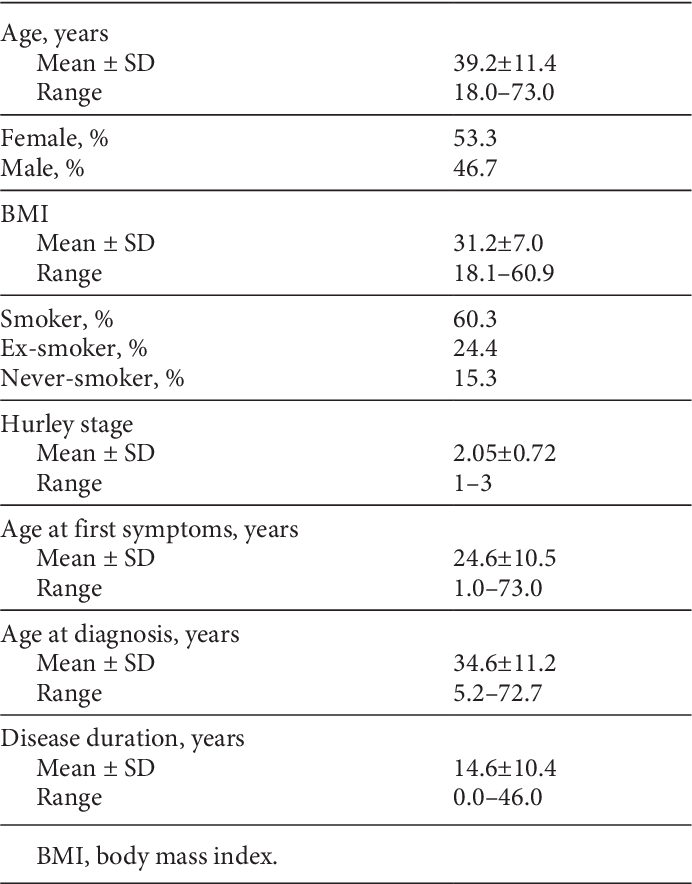
Table 2 Legend: A Snapshot of the HS Warrior. This table provides the demographic and clinical characteristics of the 394 patients in the study. Think of it as a profile of the average person with HS in this group. Table by Dr. Kokolakis and his colleagues.
Age: The average age was about 39, but the range was from 18 to 73.
BMI (Body Mass Index): The average BMI was 31.2, which falls into the “obese” category. This highlights the strong link between HS and metabolic health.
Smoker: A significant majority (over 60%) were current smokers, confirming another major lifestyle factor associated with the disease.
Hurley Stage: The average Hurley stage was 2.05, meaning most patients were dealing with recurrent abscesses and the beginning of tunnel (fistula) formation.
Age at First Symptoms vs. Diagnosis: This is the most heartbreaking part. Symptoms started, on average, around age 24. The diagnosis didn’t come until almost age 35. This 10-year gap is the central focus of the paper.
The Agonizing Journey to a Name
So, what happens during that 10-year gap? It’s a painful odyssey of bouncing between doctors and collecting wrong diagnoses.
The study found that the longer the delay, the more doctors a patient consulted. Those in the longest-delay group (over 15 years) saw an average of almost five different physicians before someone finally said the words Hidradenitis Suppurativa.
And who were they seeing? Mostly general practitioners, followed by dermatologists, surgeons, and gynecologists. This shows how HS can masquerade as so many other things depending on where the lesions appear.
A Proven natural Roadmap to Manage HS
Get the support and natural strategies you need for lasting relief and join a community that understands.
Figure 3 Legend: The Painful Path to Diagnosis. This set of graphs breaks down the journey of misdiagnosis. Graphs by Dr. Kokolakis and his colleagues.
(a, c, d) The Domino Effect: These charts show a clear, painful trend. The longer you wait for a diagnosis (from ≤2 years to ≥15 years), the more physicians you see (a), the more likely you are to be misdiagnosed (c), and the more wrong diagnoses you accumulate (d). People in the longest-delay group suffered nearly 5 misdiagnoses on average.
(b) The Doctor Merry-Go-Round: This graph shows which specialists patients saw before getting a correct diagnosis. General Physicians (GPs) were the most common, seen by nearly 80% of patients. This makes sense, as they are the first point of contact. Dermatologists, surgeons, and gynecologists were also frequently consulted.
(e) What They Called It: This is a list of the most common misdiagnoses. “Abscess” was the top one, which is understandable but incomplete. It treats the symptom, not the underlying disease. This is what happened to me personally for a long time. Other common errors were folliculitis (= inflammation of the hair follicle, ingrown hair, and even acne. This highlights a critical failure in medical education: the inability to see these recurring “abscesses” as a sign of a chronic, systemic disease.
Interestingly, the study found two factors linked to an even longer delay:
Being younger at onset: If your HS started as a teenager, you were likely to wait longer for a diagnosis. Doctors probably dismissed it as severe acne or hormonal issues.
Being a non-smoker: Because HS is so strongly linked to smoking, doctors might be less likely to suspect it in a non-smoker, delaying the diagnosis further.
This shows how biases and stereotypes about the disease can actively harm patients.
A Proven natural Roadmap to Manage HS
Get the support and natural strategies you need for lasting relief and join a community that understands.
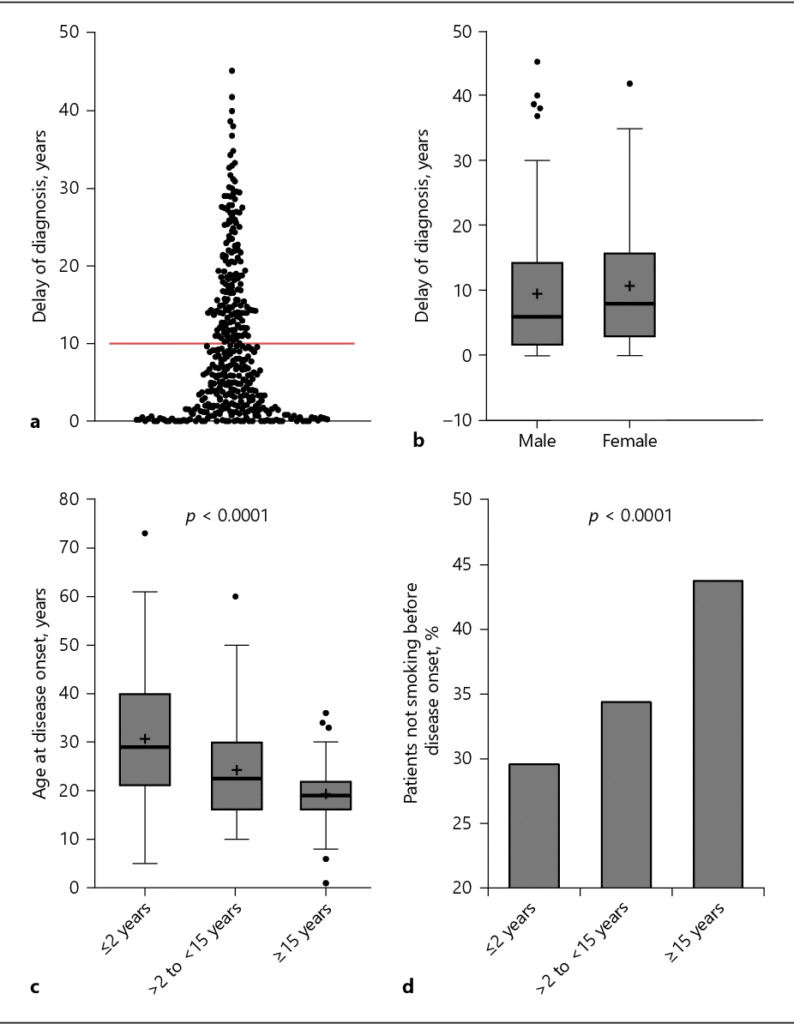
Figure 2 Legend: Dissecting the 10-Year Wait. This figure digs deeper into the diagnostic delay. Graphs by Dr. Kokolakis and his colleagues.
(a) The Spread: This dot plot shows every single patient’s delay in diagnosis. Each dot is a person. You can see how they cluster, but many are scattered far up, representing waits of 20, 30, or even 40+ years. The red line marks the 10-year average.
(b) Gender: This box plot compares the delay between males and females and found no significant difference. HS does not discriminate here.
(c) Age of Onset: This is a crucial finding. The group with the shortest delay (≤2 years) had an older average age when their symptoms first started (around 30). The group with the longest delay (≥15 years) started much younger (around 20). This means the younger you are when HS hits, the longer you’re likely to suffer without a name for your condition.
(d) Smoking Status: This graph is also fascinating. In the group with the longest delay, a much higher percentage of patients were non-smokers when their disease began. This suggests that doctors are so conditioned to associate HS with smoking that they are slower to diagnose it in non-smokers, which is a dangerous oversight.
The Knowledge Gap: Why This Paper Matters to Us
Here’s my core critique of the conventional approach, and this paper highlights it perfectly. It meticulously documents the problem, the delay, the misdiagnoses, the revolving door of specialists. But it doesn’t, and can’t, focus on the true tragedy: the missed opportunity for root-cause healing.
Conventional medicine often views drugs and surgery as the main pillars of hidradenitis suppurativa treatment. Lifestyle is seen as a small, optional add-on.
At HS Arma, we reverse this. We believe the natural approach is the main treatment. It’s the foundation. Pharmaceuticals and surgeries are powerful, life-saving tools (temporary shields) but they don’t put out the underlying fire. The goal is to build such a strong foundation of health that these tools become less necessary, or ideally, completely unnecessary.
The Brutal Consequences of a Lost Decade
The paper goes on to show, in stark detail, what happens when that fire is left to burn for ten years.
1. The Disease Gets Worse. The longer the delay, the more severe the HS was at the time of diagnosis. Patients who waited longer had a higher average Hurley stage. This isn’t a surprise, but it’s heartbreaking proof that time is not on our side when inflammation is unchecked. Eventually, it is the dermatologists who are most likely to make the correct diagnosis, but often only after years of progression.
A Proven natural Roadmap to Manage HS
Get the support and natural strategies you need for lasting relief and join a community that understands.
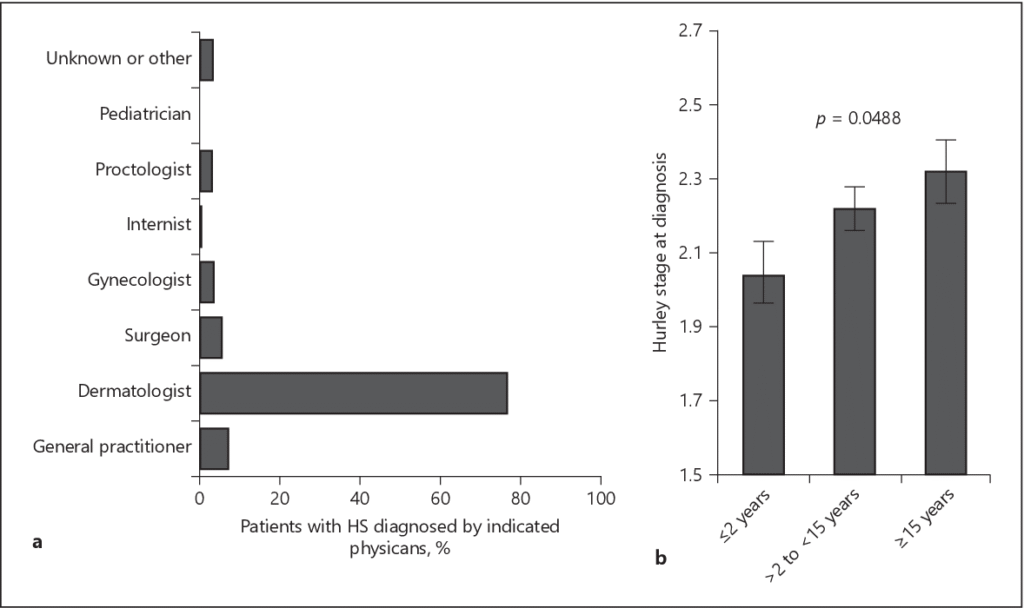
Figure 4 Legend: Diagnosis and Disease Severity.Graphs by Dr. Kokolakis and his colleagues.
(a) Who Gets it Right? This bar chart shows which type of physician ultimately made the correct HS diagnosis. It’s overwhelmingly dermatologists, who diagnosed it in nearly 80% of cases. This underscores the importance of getting a referral to a dermatologist if you suspect you have HS.
(b) Severity Increases Over Time: This graph clearly shows that the average Hurley stage at the time of diagnosis was significantly higher for patients with a longer delay. Those diagnosed in under 2 years were closer to stage 1-2, while those who waited 15+ years were firmly in stage 2-3 territory. This is direct evidence that the disease progresses when left undiagnosed and untreated at its root.
2. More Surgeries, More Scars. A delayed diagnosis was linked to a higher likelihood of having had surgery. In the group with the longest delay, nearly 90% had undergone surgical intervention. They also had more body sites that required surgery. While surgery can be a necessary intervention, this shows that a delay leads to more aggressive, physically altering procedures.
3. A Cascade of Other Diseases (Comorbidities). This, for me as a scientist, is the most critical finding. The study showed for the first time that a delay in diagnosing a chronic inflammatory skin disease leads to a higher number of other systemic disorders.
Patients with the longest delay had significantly more comorbidities, particularly musculoskeletal problems (like arthritis) and mental health impairments (like depression).
This is the again supporting our position at the HS Arma community that HS is not a skin disease. It’s a systemic inflammatory condition that manifests on the skin. The inflammation doesn’t stay put; it spills over, affecting your joints, your metabolic system, and your brain. That lost decade isn’t just about worsening boils; it’s about a slow, systemic breakdown of your overall health.
A Proven natural Roadmap to Manage HS
Get the support and natural strategies you need for lasting relief and join a community that understands.
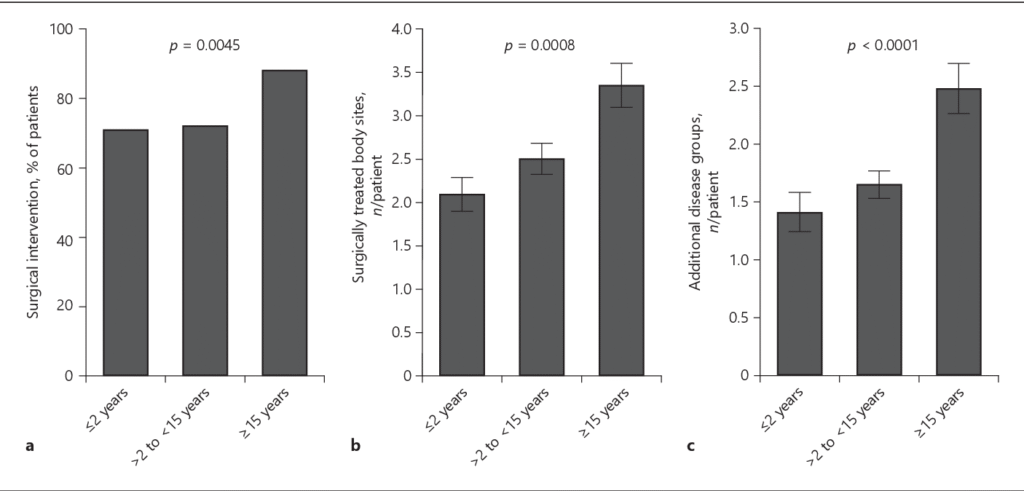
Figure 5 Legend: The Domino Effect on Your Body. This figure illustrates the devastating physical consequences of a delayed diagnosis. Graphs by Dr. Kokolakis and his colleagues.
(a) More Surgery: The percentage of patients who had undergone surgery was highest in the group that waited the longest for a diagnosis (almost 90%).
(b) More Areas Treated: Not only did more people need surgery, but they also needed it on more parts of their body. The average number of surgically treated sites was significantly higher in the long-delay group.
(c) More Chronic Illnesses: This is a crucial chart. It shows that patients with the longest diagnostic delay also had the highest number of other health problems (comorbidities). This is powerful evidence that the unchecked inflammation of HS for years contributes to other systemic diseases, proving HS is a whole-body issue, not just a skin problem.
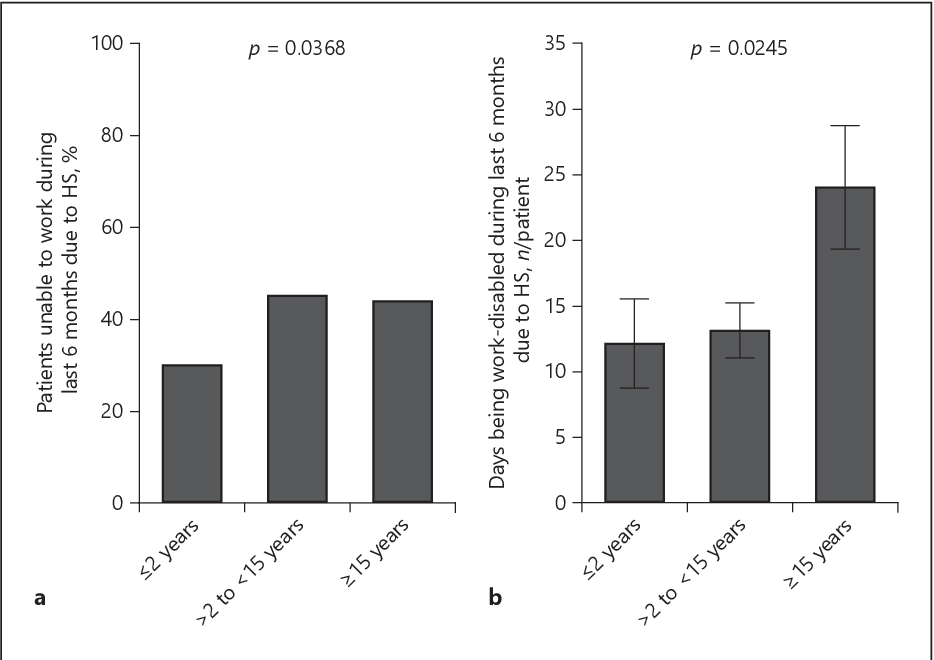
4. The Toll on Your Life. Finally, the delay takes a tangible toll on your ability to live a normal life. Patients with a longer diagnostic delay were more likely to be unable to work and missed significantly more days of work due to their HS. In the group with a 15+ year delay, they missed an average of 25 work days in just a six-month period.
A Proven natural Roadmap to Manage HS
Get the support and natural strategies you need for lasting relief and join a community that understands.
Figure 6 Legend: The Cost to Your Career. This final figure connects the diagnostic delay to a person’s professional life. Graphs by Dr. Kokolakis and his colleagues.
(a) Inability to Work: A higher percentage of patients in the moderate and long-delay groups reported being unable to work at all in the 6 months prior to the study.
(b) More Missed Days: The number of days patients were work-disabled due to HS was dramatically higher for those who waited 15 years or more for a diagnosis. They missed, on average, more than double the number of work days compared to those diagnosed earlier. This shows the real-world economic and personal cost of allowing the disease to progress unchecked.
Building Your Arma: You Don’t Need to Wait
Reading this can feel disheartening. It’s a story of systemic failure. But my message to you is one of empowerment. You don’t have to wait for a doctor to give your suffering a name before you can start to heal. The principles of treating HS naturally can begin today.
This is the core mission of our HS Arma community. We provide the guidance to start building your defenses, layer by layer, long before the disease has a chance to progress to more severe stages. We focus on:
Foundational Nutrition: Identifying your personal trigger foods and flooding your body with anti-inflammatory nutrients.
Strategic Lifestyle Changes: Mastering sleep, managing stress, and reducing your toxic load.
Natural Therapies & Skincare: Using science-backed supplements and skin protocols to calm inflammation from the inside and out.
Accountability & Support: Connecting you with a community that gets it, because we’ve lived it.
This research is a call to action. It shows us that waiting is not a neutral act; it is an act that allows damage to accumulate. You have the power to break that cycle.
Key Takeaways
The Average Wait is 10 Years: It takes an average of a decade from the first HS symptom to a correct diagnosis, a critical period where the disease often progresses.
Delay Causes Severe Disease: A longer wait is directly linked to a higher Hurley stage, more surgeries, and more chronic health conditions like arthritis and depression.
HS is a Systemic Disease: The increase in other health problems proves that the inflammation in HS affects the entire body, not just the skin. It’s a fire inside, not just smoke on the surface.
You Can Act Now: You don’t need to wait for a perfect diagnosis to start implementing powerful, natural strategies to reduce inflammation and take back control of your health.
This study validates our pain and frustration. It proves that the struggle is real and the consequences are severe. But let it also be the fuel for your fire. Don’t wait another day. Start building your armor, start quenching the inflammation, and start your journey toward the remission you deserve. Healing is possible.
A Proven natural Roadmap to Manage HS
Get the support and natural strategies you need for lasting relief and join a community that understands.
1. Not Medical Advice: All content and information on this website is for informational and educational purposes only. It does not constitute medical advice and is not a substitute for professional diagnosis, treatment, or consultation with a qualified healthcare provider.
2. My Role and Qualifications: I am a biomedical scientist and PhD candidate and share information from that perspective, combined with my personal experience as a patient with Hidradenitis Suppurativa. However, I am not a medical doctor, physician, or registered healthcare professional. Do not consider our relationship a doctor-patient relationship.
3. Consult Your Doctor: Always seek the advice of your medical doctor or another qualified health professional with any questions you may have regarding a medical condition. Never disregard professional medical advice or delay seeking it because of something you have read on this website. If you suspect you are experiencing a medical emergency, or a severe infection, do not rely on this website or the HS Arma community, please call your local emergency services or go to the nearest emergency room immediately.
4. A Critical Warning on Medication: Pharmaceutical drugs are a crucial tool in managing Hidradenitis Suppurativa for many people. Under absolutely no circumstances should you ever alter, reduce, or stop taking your prescribed medication without the explicit direction of the doctor who prescribed it. Doing so can be dangerous. Always consult with your doctor before doing anything related to your treatment plan.
5. No Liability: Your use of this website and reliance on any information provided is solely at your own risk.
6. Individual Results May Vary: Every patient’s biological baseline, genetics, and adherence to the protocol is different. Therefore, I cannot guarantee specific results, cures, or timelines for your Hidradenitis Suppurativa.
7. Scientific and Expressive Freedom: The articles published on this blog are distinct from formal peer-reviewed academic literature. They serve as an independent platform for my personal viewpoints, scientific hypotheses, and philosophical reflections as an independent scientist and HS patient. While grounded in biomedical research, I exercise a degree of expressive freedom to translate rigid academic data into insights from a patient perspective. These writings are my personal meditations on the science of HS and should be read as my individual perspective, not as universally accepted clinical consensus or formal peer-reviewed literature.